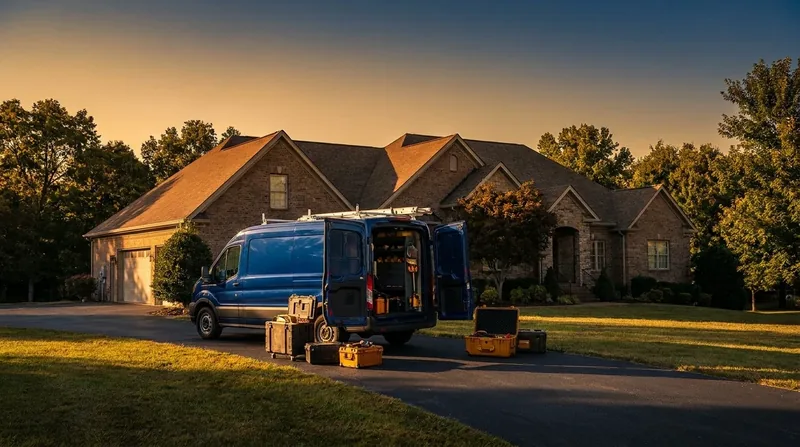
How to Start a Pest Control Business in Virginia: VDACS License $75 Per Location, Expires March 31
How to Start a Pest Control Business in Virginia: VDACS License $75 Per Location, Expires March 31
To run a pest control company in Virginia, you need a pesticide business license from the Virginia Department of Agriculture and Consumer Services (VDACS), Office of Pesticide Services. The license is issued under the Virginia Pesticide Control Act (Va. Code 3.2-3900 and following). It costs $75 for each location or outlet you operate, and every business license expires at midnight on March 31 each year. Your company must also have liability insurance in place before the license is issued, and each person who applies pesticides for pay needs certification. The current regulations are 2VAC5-675 (fees), 2VAC5-680 (business licensing) and 2VAC5-685 (applicators).
This guide covers the steps in the order that saves the most time: the license and insurance first, then your certified people, then the legal entity, local tax registration and recordkeeping. This is informational content, not legal or tax advice. Pest control carries real liability exposure, so have an attorney review your customer contracts and a CPA review your structure before you sign anything.
What You Need Before You File
Gather these items first. Most are required before VDACS will issue the license, so a missing item will stall the whole process.
- A business name that meets SCC naming rules and is not already on file
- Articles of Organization (Form LLC1011) for an LLC, or Articles of Incorporation (Form SCC619) for a corporation
- A certificate of liability insurance that meets VDACS minimums and shows any exclusions for pesticide-use damage
- Commercial applicator certification for the people who apply pesticides for pay, and registered technician certification for technicians
- A federal Employer Identification Number (EIN) from the IRS
- A written plan for secure pesticide storage and a system for keeping application records
- A list of every location or outlet you will operate, because the license fee is charged per location
Fees and Deadlines at a Glance
| Item | Amount | Agency or rule |
|---|---|---|
| Pesticide business license | $75 per location, nonrefundable, renewed by March 31 | VDACS, 2VAC5-675-50 |
| Late renewal penalty | 20 percent of the license fee ($15 on a $75 license) | VDACS |
| Initial commercial applicator certificate | $25 | VDACS, 2VAC5-675-30 and -40 |
| Registered technician certificate | $25 | VDACS, 2VAC5-675-30 and -40 |
| Reexamination | $25 | VDACS, 2VAC5-675-30 and -40 |
| Adding a category or subcategory | $25 | VDACS, 2VAC5-675-30 and -40 |
| LLC Articles of Organization | $100 | State Corporation Commission (SCC) |
| LLC annual registration fee | $50 per year (no annual report) | SCC |
| Assumed name certificate (DBA) | $10 | SCC |
| Name reservation | $10 for 120 days | SCC |
Step 1: Understand the Pesticide Business License
Any business that distributes, stores, sells, recommends for use, mixes or applies pesticides must hold a pesticide business license (2VAC5-675-50). A pest control company that applies pesticides for pay falls squarely in that group. The fee is $75 for each location or outlet, and it is nonrefundable. Fees were cut from $150 to $75 effective January 2, 2025, so disregard older articles and forum posts that still quote the higher figure.
Every business license expires at midnight on March 31 each year. If you do not apply for renewal by March 31, a late fee of 20 percent of the license fee applies. On a $75 license, that is $15. Put March 31 on your calendar the day the license arrives.
Small household merchants are exempt. That category covers grocery and drug stores, veterinarians and similar sellers of limited quantities of non-restricted pesticides. The exemption does not describe a service company that treats homes and commercial buildings, so plan on paying the license.
Confirm the current application form and submission method on the VDACS website before you file. Ask VDACS directly if you have questions about which locations need their own license.
Step 2: Put Liability Insurance in Place Before Applying
VDACS requires financial responsibility before it issues the license (2VAC5-680-80). The policy must cover handling, storage, application, use or misuse, and disposal of pesticides, and it must include completed operations. The minimums are:
- $100,000 for property damage
- $100,000 for personal injury or death of one person
- $300,000 per occurrence
Ask your agent to confirm in writing that the policy covers pesticide application. Many general liability policies exclude pesticide-related damage, and the certificate must show any such exclusion. If your certificate shows one, ask your insurer to remove it or find a policy without it, and confirm with VDACS whether the exclusion is acceptable before you apply.
Keep the minimum coverage in force at all times. Send a current certificate to VDACS at each insurance renewal. You must notify VDACS at least 10 days before any reduction or cancellation of coverage. If your deductible is more than $1,000, VDACS wants evidence covering the difference, so ask the department what form that evidence should take.
Step 3: Certify Your Applicators and Technicians
Commercial applicators and registered technicians must be certified. The business applicant, or a designated employee, must also show knowledge of pesticide law, hazards and safe handling (2VAC5-680-20). In a small company, the owner is often the designated person, so plan to test yourself or name the employee who will.
- Pick the right certification. A commercial applicator certificate covers people who apply pesticides for pay. Registered technicians are the entry route for people who do not yet have the time in service the applicator exam requires. Confirm each person's eligibility and the categories they need with VDACS, since categories determine what each person may apply.
- Pay the fees. The initial commercial applicator certificate is $25, and the registered technician certificate is $25. Reexamination is $25, and adding a category or subcategory is $25 (2VAC5-675-30 and -40). Government employees are exempt from the certification fees.
- Prepare for the exam. VDACS sets the exam format, testing sites and any separate testing charge. Confirm those details with VDACS before you schedule anyone, and do not assume they match what another company described.
- Calendar the renewal. Certificates expire June 30 in the second year after issuance. Renew by June 30. If a certificate is not renewed within 60 days after it expires, the person must take the exam again.
Step 4: Check Whether Lawn Work Requires a Fertilizer Certification
Many pest control companies also offer lawn treatments. If you do, check with VDACS whether you need a fertilizer applicator certification in addition to your pesticide credentials. The answer depends on what you apply and how you apply it, so get it in writing before you add lawn services to your offer. Keep one set of service records that covers both pest and lawn work.
Step 5: Form the Business and Register for Taxes
Many owners form an LLC. The Articles of Organization (Form LLC1011) cost $100 and are filed through the SCC Clerk's Office. You can file online through the SCC Clerk's Information System at https://cis.scc.virginia.gov/. Online filings can be expedited: next day for $50 or $100 (submitted by 2:00 PM Eastern, response by 4:00 PM the next business day), or same day for $200 (submitted by 10:00 AM Eastern, response by 4:00 PM). Expedited service is online only and nonrefundable.
The name must contain 'limited company', 'limited liability company', 'LC', 'L.C.', 'LLC' or 'L.L.C.' and must be distinguishable from names already on file. You can reserve a name for $10 for 120 days. The reservation can be renewed in the 45 days before it expires. Business information and forms are at https://www.scc.virginia.gov/businesses/.
An LLC files no annual report. Instead, it pays a $50 annual registration fee to the SCC. The fee is due the last day of the 12th month after the month the LLC was organized, and every year after that. The SCC assesses the fee about two months ahead. A late payment adds a $25 penalty, and the LLC is canceled at the end of the third month after the due date.
Virginia requires a registered agent for every entity. The agent must be a Virginia resident with a Virginia street address for the registered office, available during business hours. The agent must also be a member of the Virginia State Bar, or a member, manager, officer, trustee or general partner of the entity. An entity cannot be its own registered agent.
If you operate under a name other than your legal entity name, file an Assumed Name Certificate with the SCC. The fee is $10, there is no newspaper publication, and you file it with the SCC, not the circuit court.
Get an EIN from the IRS. Then register with the Virginia Department of Taxation (Virginia Tax) at https://www.tax.virginia.gov/ for the taxes that apply to your business. If you sell products or materials to customers, ask a CPA whether you need a sales tax permit, which is described at https://www.tax.virginia.gov/sales-and-use-tax.
Step 6: Check the Local Business License (BPOL)
Virginia has no general statewide business license, and the SCC issues none. The local license is the Business, Professional and Occupational License (BPOL) tax under Va. Code 58.1-3700 and following. Each city, county or town administers its own BPOL, usually through the Commissioner of the Revenue.
Not every locality levies a general BPOL. Va. Code 58.1-3704 allows a locality to levy none. Stafford, Rockingham, Bedford County, Washington County, Montgomery County, Louisa and Fluvanna are examples of localities without a general county license. Towns can also displace the county tax, so the rules may differ for a business located inside a town. Check with the Commissioner of the Revenue for the exact address you will operate from.
The population of the locality sets a floor on what it can charge. In a locality with more than 50,000 people, a license cannot be required for businesses with gross receipts under $100,000. In a locality with 25,000 to 50,000 people, the floor is $50,000 in gross receipts. In a locality under 25,000 people, no floor applies. Localities over 50,000 may waive the license for businesses up to $200,000 in gross receipts, but confirm that waiver ceiling with your locality because the figure should be verified before you rely on it.
Localities set their own rates and filing deadlines. Do not apply a rate you read about one locality to your own business.
Step 7: Set Up Labeling, Spill Response and Records
VDACS sets the rules for pesticide labeling, storage, spill response and records. Read the Virginia Pesticide Control Act and the regulations in 2VAC5-675, 2VAC5-680 and 2VAC5-685 before you train your technicians. Follow the label of every product you use, because the label is the instruction for lawful use. Ask VDACS how long you must keep application records, since the retention period is set by the department.
Keep your spill kit and chemical storage described in your written plan, and tell your insurer how you store and transport chemicals in your vehicles. Vehicle and storage coverage should be discussed with your insurer before you buy the policy.
Deadline Calendar You Need From Day One
- Pesticide business license: renew by midnight on March 31 each year. A late renewal adds a 20 percent penalty.
- Applicator and technician certificates: renew by June 30. Expired certificates not renewed within 60 days require the exam again.
- Insurance: send a current certificate to VDACS at each renewal, and give at least 10 days notice before any reduction or cancellation.
- LLC annual registration: $50 due the last day of the 12th month after the month of organization, then yearly. The SCC bills about two months ahead.
- Local BPOL: set by your locality, which controls the rate and filing date.
Tips and Common Mistakes to Avoid
- Licensing only the main office. Each location or outlet carries its own $75 fee. Count every branch before you file.
- Letting insurance lapse at renewal. The minimum must stay in force at all times, and VDACS needs a fresh certificate at each renewal.
- Missing the June 30 certificate deadline. Missing the 60-day window means retaking the exam, which delays your ability to apply.
- Assuming a registered technician can do any job. Confirm each technician's categories with VDACS before assigning work.
- Using old fee figures. The business license fell from $150 to $75 effective January 2, 2025. Check current amounts on the VDACS site.
- Assuming there is no local license. Many localities levy a BPOL, and some do not. Check your specific address before you open.
- Operating under a name you have not filed. An assumed name needs a $10 certificate with the SCC.
- Relying on a general liability policy alone. The policy must cover pesticide handling, application and disposal, and the certificate must show any exclusions.
- Ignoring workers' compensation. Once you have three or more employees, the penalty for not carrying coverage can reach $250 a day, up to a maximum of $50,000. Confirm the requirement with your insurer.
Expected Results
Pest control services are designed to reduce pest activity, but results vary with the pest, the structure, the product label and how well the customer follows prevention steps. Write your marketing with hedged language such as 'may help reduce' or 'is designed to control,' and avoid promises of guaranteed elimination.
The product label defines what a pesticide is approved to control. Your marketing and service descriptions should not claim more than the label allows. An overstated claim creates liability exposure that your insurance may not cover, so have your attorney review your advertising before launch.
Next Steps
Start with the insurance certificate and the applicator certifications, because VDACS needs both before it issues the license. Then form the LLC through the SCC, register with Virginia Tax, and confirm the BPOL requirement at your address. Confirm every fee, form and deadline above with VDACS, the SCC, Virginia Tax or your locality before you file, since agency figures change.
This article is informational content, not legal or tax advice. Consult a qualified attorney for contracts and liability questions, and a CPA for entity and tax questions, especially if you operate in more than one locality or plan to hire employees.
Keep exploring: related Virginia guides
- How to Start a Pressure Washing Business in Virginia
- How to Start an Auto Detailing Business in Virginia
- How to Start a Lawn Care and Landscaping Business in Virginia
- How to Start a Cleaning Business in Virginia
- How to Start an LLC in Virginia
- Virginia Business License
- Cost to Start a Business in Virginia
- All Virginia business types
- Every Virginia guide in one place