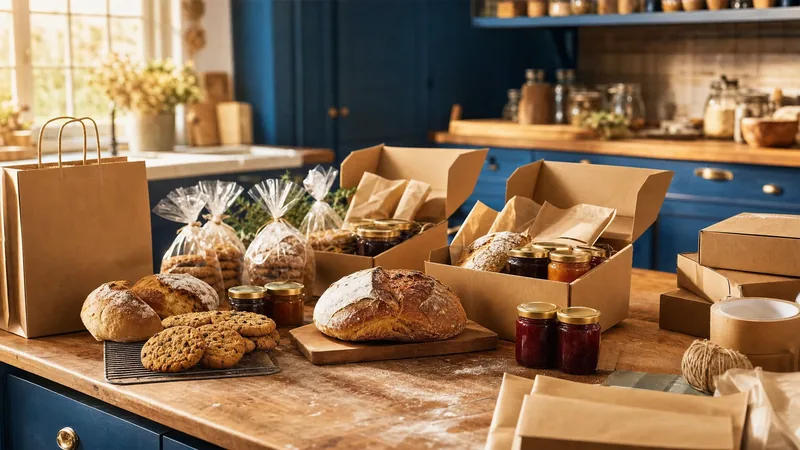
Virginia Cottage Food Law 2026: Sell Home-Made Food Online, No Permit, No $25,000 Cap
Virginia Cottage Food Law 2026: Sell Home-Made Food Online, No Permit, No $25,000 Cap
Virginia's home food exemption lets qualifying foods be made in a private kitchen and sold without a state permit, inspection, or fee. Since July 1, 2026, the Virginia home kitchen law is wider than many older guides say. Qualifying foods can now be sold online and delivered, so a farmers market table is no longer the only option.
This guide covers Va. Code § 3.2-5130, what changed in 2026, which foods qualify, how to label them, which local rules may still apply, and when a home operation has to become a commercial one. The agency that runs the program is the Virginia Department of Agriculture and Consumer Services (VDACS) Food Safety Program.
Disclaimer: This article is informational content. It is not legal or tax advice. Laws and agency guidance change, so confirm current requirements with VDACS, your local government, and a qualified attorney or CPA before you sell.
What Changed on July 1, 2026
House Bill 402 (2026 Acts, chapter 605) took effect July 1, 2026, and widened the home food exemption. Under the amended law, qualifying foods may be:
- Sold at any location
- Sold through the internet or by phone to an individual in Virginia for personal consumption
- Delivered in person, by mail, or by delivery service
- Advertised online
If you read older guidance saying online checkout was not allowed, that guidance is out of date. Online sales are now permitted for qualifying foods. Further changes may be proposed in the 2027 session, so check the VDACS Food Safety Program for updates before you plan a larger operation.
What Qualifies Under Subsection C.3
The exemption covers foods made in a private home that do not require time or temperature control after preparation. The list in subsection C.3 includes:
- Candies
- Jams and jellies that are not considered low-acid or acidified low-acid
- Dried fruits, dry herbs, dry seasonings, and dry mixtures
- Coated and uncoated nuts
- Vinegars and flavored vinegars
- Popcorn, popcorn balls, and cotton candy
- Dried pasta, dry baking mixes, cereals, trail mixes, and granola
- Roasted coffee and dried tea
- Baked goods that need no refrigeration
Roasted coffee is on the list, so home coffee roasting qualifies. Baked goods qualify when they need no refrigeration or temperature control after preparation. Apply that test to every recipe you plan to sell.
Two product types have their own rules:
- Pickles and other acidified vegetables with an equilibrium pH of 4.6 or lower follow the same sales channel rules, but they are limited to $9,000 in gross sales per calendar year (subsection C.4). This is the only dollar limit in the law. There is no $25,000 cap.
- Honey from your own hives qualifies (subsection C.5) if you sell fewer than 250 gallons a year, sell no other products beyond those allowed by subsections C.3 and C.4, and use the honey label described below.
Nonprofit one-day sales are exempt under a separate provision of the law.
What Does Not Qualify
Anything that needs refrigeration or temperature control is outside the exemption. Common examples include cheesecake, cream fillings, custards, cooked meats, and prepared meals. Catering and meal sales from a home are also outside the exemption.
| Generally qualifies | Outside the exemption |
|---|---|
| Baked goods that need no refrigeration | Cheesecake |
| Dry baking mixes, granola, trail mix | Cream fillings and custards |
| Roasted coffee and dried tea | Cooked meats |
| Jams and jellies that are not low-acid | Prepared meals and catering |
| Pickles at pH 4.6 or lower, up to $9,000 in gross sales per calendar year | Anything that requires refrigeration or temperature control |
Where and to Whom You Can Sell
Sales must be made to an individual in Virginia for personal consumption. Foods may not be sold for resale or on consignment. They also may not be offered for use or sale in retail food establishments, so selling to coffee shops, grocery stores, or restaurants is still not allowed under this exemption.
When the law says "ship," it means within Virginia. Do not ship to customers in other states under this exemption.
How to Sell Food From Home in Virginia: Materials You Need
- A clean, well-maintained home kitchen used to prepare the qualifying foods
- Written recipes listing every ingredient, quantity, and process step
- A digital kitchen scale and measuring tools
- Tested recipes from reliable sources for any pickles or acidified vegetables, plus a method for confirming the finished product is at or below pH 4.6
- Food-safe packaging suited to each product
- Label stock and a printer, or a label template
- A batch log recording the date made, quantity produced, and sales
- A spreadsheet that tracks gross sales by calendar year
- For honey, beekeeping records showing the hives you own
Step-by-Step: Starting Under the Home Food Exemption
- Sort your products into qualifying and non-qualifying lists. For each product, ask one question: does it need refrigeration or temperature control after it is made? If yes, it stays off the list. Write the answer down with the recipe. If you cannot answer with confidence, leave the product out of your sales plan until you can.
- Use tested recipes for acidified products. Pickles and acidified vegetables must reach an equilibrium pH of 4.6 or lower. Vinegar alone does not settle that question. Work from tested recipes, and ask VDACS if you are unsure how to verify pH. Do not change vinegar, salt, or acid ratios from memory.
- Confirm the sales channel before you take an order. Each sale must go to an individual in Virginia for personal consumption. If a buyer says the food is for their shop, cafe, or restaurant, decline the sale. The exemption excludes retail food establishments, so that order falls outside the law.
- Set up your production and records. Keep your kitchen clean, store ingredients and finished goods properly, and log every batch with its date, quantity, and ingredients. Good records help you respond to a consumer complaint, and VDACS may inspect after a complaint (subsection D).
- Track gross sales against the limits. Acidified pickles are capped at $9,000 in gross sales per calendar year. Honey from your hives must stay under 250 gallons a year. Review your totals monthly so you are not surprised at year end.
- Print compliant labels. Follow the label rules in the next section for every product, including the honey warning if you sell honey.
- Set up online sales and delivery within Virginia. You may advertise online, take orders online or by phone, and deliver in person, by mail, or by delivery service. Each order must still go to a Virginia buyer for personal consumption. Keep the label on every package you deliver.
- Check local rules before you open. The state exemption does not override local zoning or licensing. Ask your city or county planning office about home occupation rules, and ask whether your locality levies a Business, Professional and Occupational License (BPOL) tax. The local section below has details.
- Decide whether you need a business name or entity. A sole proprietor can sell under their own name. If you use a business name, file an Assumed Name Certificate (DBA) with the State Corporation Commission. An LLC is optional. The filing fees are in the business formation section below.
- Ask Virginia Tax about sales tax. Virginia's combined state and local sales tax rates vary by locality. Whether and how sales tax applies to your cottage food sales is a question to confirm with Virginia Tax at https://www.tax.virginia.gov/.
- Know when to go commercial. A food manufacturer or storage warehouse needs a VDACS permit under Va. Code § 3.2-5130 A. Confirm the permit fee with VDACS. Restaurants and food service operations go to the Virginia Department of Health. If your product list grows beyond what the exemption covers, review the bakery and meal prep guides on this site before you expand.
Virginia Cottage Food Label Requirements
The label goes on the principal display panel. If the package is too small for that, use a sign. Every label must include:
- The preparer's name
- The physical address or post office box number
- A telephone number
- The date the food was processed
- The exact statement: NOT FOR RESALE PROCESSED AND PREPARED WITHOUT STATE INSPECTION
Honey labels use a different required statement: PROCESSED AND PREPARED WITHOUT STATE INSPECTION. WARNING: Do Not Feed Honey to Infants Under One Year Old.
Federal allergen labeling is a separate issue. Check current FDA rules before you finalize any label.
Local Rules That Still Apply
The state exemption sets the rules for the food itself. Local rules can still affect your business.
- Agricultural operations. If your home is part of a farm that is an agricultural operation, localities may not regulate preparing and selling these foods unless there is a substantial impact on health, safety, or general welfare (Va. Code § 15.2-2288.6).
- Homes that are not farms. A home that is not a farm remains subject to local home occupation zoning, which varies by locality. Check with the planning office before you start.
- BPOL. The Business, Professional and Occupational License is a local license tax under Va. Code § 58.1-3700 et seq. Each city or county administers it, usually through the Commissioner of the Revenue. Virginia has no general statewide business license, and not every locality levies a general BPOL tax. Va. Code § 58.1-3704 allows a locality to levy none. Stafford, Rockingham, Bedford County, Washington County, Montgomery County, Louisa, and Fluvanna are examples of localities without a general county license, and towns can displace the county tax. Each locality sets its own rates and filing deadlines.
- Population floors. State law limits what a locality can require based on population. A locality over 50,000 people cannot require a license for gross receipts under $100,000. A locality of 25,000 to 50,000 people cannot require one for gross receipts under $50,000. No floor applies to a locality under 25,000 people. Localities over 50,000 people may waive the license for smaller operations, so confirm the waiver ceiling with your locality.
- Farmers markets and peddler rules. A peddler or itinerant merchant license may come up at markets. Check with the locality that hosts the market.
- Meals tax. The county meals tax does not apply to farmers market and roadside sellers whose annual income from those sales is $2,500 or less (Va. Code § 58.1-3833). Confirm how it applies to your products with your locality.
Business Name and Entity Options
You do not need an LLC to sell under the home food exemption. Many home sellers start as sole proprietors. If you want a business name or a separate legal entity, these are the state filings and fees:
- Assumed name (DBA): $10, filed with the State Corporation Commission (SCC) Clerk's Office, not the circuit court. Details are at https://www.scc.virginia.gov/businesses/.
- Name reservation: $10 for 120 days.
- LLC Articles of Organization (Form LLC1011): $100, filed online through the SCC Clerk's Information System at https://cis.scc.virginia.gov/. Expedited online service is available for $50 or $100 next day, or $200 same day. Expedited service is nonrefundable.
- LLC annual registration fee: $50, paid to the SCC. Virginia LLCs file no annual report. The fee is due the last day of the 12th month after the month the LLC was organized, and every year after that. A late payment adds a $25 penalty, and the LLC is canceled at the end of the third month after the due date.
Forming an LLC does not change what the food exemption allows, and it does not replace local licensing. Talk with a qualified attorney or CPA if you plan to hire employees, bring in investors, buy property, or move into a commercial kitchen. The Virginia Small Business Development Center network at https://www.virginiasbdc.org/ can also help you review a plan.
Enforcement and Penalties
Exempt operations do not need a permit or pay an inspection fee. VDACS may inspect after a consumer complaint (subsection D). Violating the section is a Class 1 misdemeanor (subsection E). The exemption protects you only while you stay within its terms, so each rule in this guide matters.
Tips and Common Mistakes
Tips
- Keep the recipe, the refrigeration answer, and the label text together in one file for each product.
- Keep a separate tally for pickles and honey so you can see your limits in real time.
- Call your locality's Commissioner of the Revenue and planning office before your first sale, not after.
- Use a batch code on each package so you can trace a complaint back to one production run.
- Confirm that every online order ships to or is delivered to a Virginia address before you accept it.
Common Mistakes
- Selling to a coffee shop, grocery store, or restaurant. The exemption excludes retail food establishments.
- Shipping out of state. Under this exemption, shipping means within Virginia.
- Relying on old guidance. Earlier guidance said online checkout was not allowed. That is out of date for qualifying foods.
- Selling refrigerated items. Cheesecake and cream-filled products are outside the exemption.
- Missing the pickle limit. Acidified pickles are capped at $9,000 in gross sales per calendar year.
- Leaving off the processed date. The date is a required label element.
- Treating "no permit" as "no rules." Local zoning, BPOL, and tax questions still apply.
Expected Results
Many home sellers use the exemption to test recipes, build a local customer base, and learn how orders, packaging, and delivery work before deciding whether to grow. Results vary widely with your product, pricing, location, and marketing. Nothing in this guide promises sales, income, or any particular outcome.
Under the exemption, you can expect no VDACS permit, no inspection fee, and no routine inspection. You should expect local paperwork, possible tax questions, and the possibility of an inspection after a consumer complaint. Check FDA guidance before you describe a product with health or nutrition claims.
Frequently Asked Questions
Can I sell baked goods from home in Virginia?
Yes, if the baked goods need no refrigeration or temperature control after preparation, and you follow the sales channel and label rules. Cheesecake and cream-filled items do not qualify.
Do I need a state permit or fee?
Not for qualifying foods sold under the exemption. Confirm local requirements separately, including BPOL where your locality levies it.
Can I sell online?
Yes. Since July 1, 2026, qualifying foods may be sold online or by phone to an individual in Virginia for personal consumption, and delivered in person, by mail, or by delivery service.
Who do I contact with questions?
Contact the VDACS Food Safety Program at [email protected] or 804-786-3501. Ask before you start, and ask again if the law changes in the 2027 session.
Official Resources
- Virginia Department of Agriculture and Consumer Services: https://www.vdacs.virginia.gov/
- Virginia Code: https://law.lis.virginia.gov/
- State Corporation Commission: https://www.scc.virginia.gov/businesses/
- SCC Clerk's Information System: https://cis.scc.virginia.gov/
- Virginia Department of Taxation (Virginia Tax): https://www.tax.virginia.gov/
- Virginia Small Business Development Center network: https://www.virginiasbdc.org/
This article is informational content, not legal or tax advice. Consult a qualified attorney or CPA about your specific situation.
Keep exploring: related Virginia guides
- How to Start a Vending Machine Business in Virginia
- How to Start a Craft Brewery in Virginia
- How to Start a Restaurant in Virginia
- How to Start a Farm Winery in Virginia
- How to Start an LLC in Virginia
- Virginia Business License
- Cost to Start a Business in Virginia
- All Virginia business types
- Every Virginia guide in one place