How to Start a Towing Business in Virginia
How to Start a Towing Business in Virginia
Virginia has roughly 4.3 million registered vehicles on its roads. Breakdowns happen every day. Accidents happen every hour. That’s a lot of business for towing operators — and it explains why Virginia takes licensing seriously enough to run two separate regulatory systems for the industry.
Most people looking to start a towing company focus entirely on the business license side and miss the other half. Get that wrong and your drivers are operating illegally, regardless of whether your company paperwork is perfect. This guide covers both tracks, plus the real startup costs you need to plan for.
Virginia’s Dual Towing License System
Virginia splits towing regulation between two agencies. The Board of Towing and Recovery Operators licenses the business entity. The Department of Criminal Justice Services (DCJS) registers individual drivers. You need both. They’re independent of each other, and neither one covers what the other does.
The Board of Towing and Recovery Operators
The Board operates under the Secretary of Transportation and issues operator licenses to towing companies. There are two classes:
Class A covers heavy-duty towing and recovery — think 18-wheelers, buses, commercial trucks, overturned vehicles. Class A operators handle the serious recovery work. To qualify, you must show evidence of passing the TRAA (Towing and Recovery Association of America) certification exam, or an equivalent certification accepted by the Board. This isn’t just paperwork — it validates that someone in your operation actually understands heavy recovery work, which can be genuinely dangerous.
Class B covers light and medium-duty towing — passenger vehicles, pickup trucks, vans, most everyday roadside work. The majority of new operators start here. The certification requirements are less intensive, but the business licensing process runs through the same Board.
Both classes require a criminal background check for all applicants. The Board has discretion to refuse a license based on prior convictions, particularly those involving fraud, theft, or crimes related to the operation of a towing business. Prior convictions don’t automatically disqualify you, but dishonesty-related offenses are reviewed carefully.
DCJS Driver Registration
This is the part that catches new operators off guard.
Every individual who operates a tow truck in Virginia must be registered with the Department of Criminal Justice Services at dcjs.virginia.gov. Not just licensed — registered. And every registered driver must carry their DCJS registration document while operating a tow truck. Not in the office, not in the glove box of a personal car. On their person, in the truck, while working.
DCJS registration involves its own application, background check, and fee. If you hire a driver who isn’t registered and they’re caught operating your tow truck, that’s a problem for both of you.
The practical implication: before you put anyone behind the wheel — including yourself — make sure the DCJS registration is complete and the document is in hand. Build this into your hiring process from day one. Don’t treat it as an afterthought after the business license arrives.
Business Structure and Registration
The regulatory complexity is real, but the basic business formation side is straightforward.
Form Your LLC
An LLC is the standard choice for a towing company. It separates personal and business liability, which matters a lot in an industry where accidents happen and vehicles get damaged. File your Articles of Organization with the Virginia State Corporation Commission (SCC) at cis.scc.virginia.gov. The filing fee is $100. Annual registration is $50 per year.
You must have a registered agent with a physical Virginia address — not a PO Box. If you don’t have a fixed office yet, a registered agent service handles this for $50–200 a year.
Get Your EIN
Before you open a business bank account or register for taxes, get your Employer Identification Number (EIN) from the IRS. It’s free at irs.gov/ein and takes about five minutes online.
Register with the Virginia Department of Taxation
Head to tax.virginia.gov to register your business for state taxes. If you’ll be selling anything taxable (some towing-adjacent services can trigger sales tax obligations), you’ll need a sales tax account. If you have employees, you’ll register for employer withholding. Do this before you start operating.
Your Physical Place of Business
The Board of Towing and Recovery Operators requires that licensed towing companies have a physical place of business in Virginia. A storage lot or dispatch yard counts — but you need a real address. This isn’t optional, and it connects to the local licensing requirements below.
BPOL License
Virginia has no statewide general business license. Instead, every locality runs its own Business, Professional, and Occupational License (BPOL) system. If you operate in multiple cities or counties, you may need a BPOL in each one. The tax is calculated on gross receipts — not profit — and rates vary by locality. Contact the commissioner of the revenue in each jurisdiction where you have a physical presence or operate regularly.
Vehicle and Insurance Requirements
This is where the money goes. Towing is capital-intensive and insurance-heavy. There’s no way around it.
Commercial Auto Insurance
Every tow truck must carry commercial auto insurance with minimum liability coverage as prescribed by the Board of Towing and Recovery Operators. Standard personal auto insurance doesn’t cover commercial towing operations — that’s a policy exclusion that will void your claim if something goes wrong on the job. Get a commercial auto policy that specifically covers tow trucks.
On-Hook and Garage Keepers Insurance
On-hook insurance covers vehicles while they’re being towed. If the car you’re hauling gets damaged during transport, on-hook pays for it. Garage keepers insurance covers vehicles stored at your lot. When you’re holding someone’s vehicle post-accident or while they arrange repairs, garage keepers protects you against fire, theft, vandalism, and weather damage.
These aren’t optional extras if you’re serious about the business. One damaged vehicle claim without this coverage can wipe out months of revenue.
General Liability
$1 million per occurrence is the standard recommendation for general liability coverage in towing. This covers third-party bodily injury and property damage that doesn’t fall under your commercial auto policy — things that happen on someone’s property, at a scene, or during storage operations. Some commercial contracts and police rotation agreements will require proof of this coverage before they’ll work with you.
Workers’ Compensation
Virginia requires workers’ comp coverage once you reach three or more employees — and that includes part-time and seasonal workers, not just full-time. If you’re a sole operator with no employees, you’re exempt. But the moment you hire a second or third driver, get coverage in place. The Virginia Workers’ Compensation Commission handles oversight at workcomp.virginia.gov.
Vehicle Inspection and Equipment Requirements
Every tow truck must pass Virginia’s commercial vehicle safety inspection and meet the equipment requirements set by the Board. This means properly functioning lights, safety chains, straps rated for the load, and towing equipment in serviceable condition. Don’t buy a used truck without budgeting for the inspection and any equipment upgrades needed to pass.
Startup Costs at a Glance
Here’s the honest picture. Towing is not a low-barrier business. The regulatory side is manageable — the equipment and insurance side is what separates serious operators from people who looked into it and backed out.
| Item | Cost |
|---|---|
| LLC filing (SCC) | $100 |
| Annual LLC registration | $50/year |
| Board of Towing operator license | Varies by class |
| DCJS driver registration | Fee per driver |
| TRAA certification (Class A) | Exam + training costs |
| Used flatbed tow truck | $30,000–$80,000 |
| Used wrecker | $40,000–$100,000 |
| Insurance package (commercial auto + GL + on-hook) | $8,000–$20,000/year |
| Lot/storage yard lease | $1,000–$5,000/month |
| Dispatch system and GPS | $100–$500/month |
| Total lean startup estimate | $60,000–$150,000 |
A few notes on these numbers:
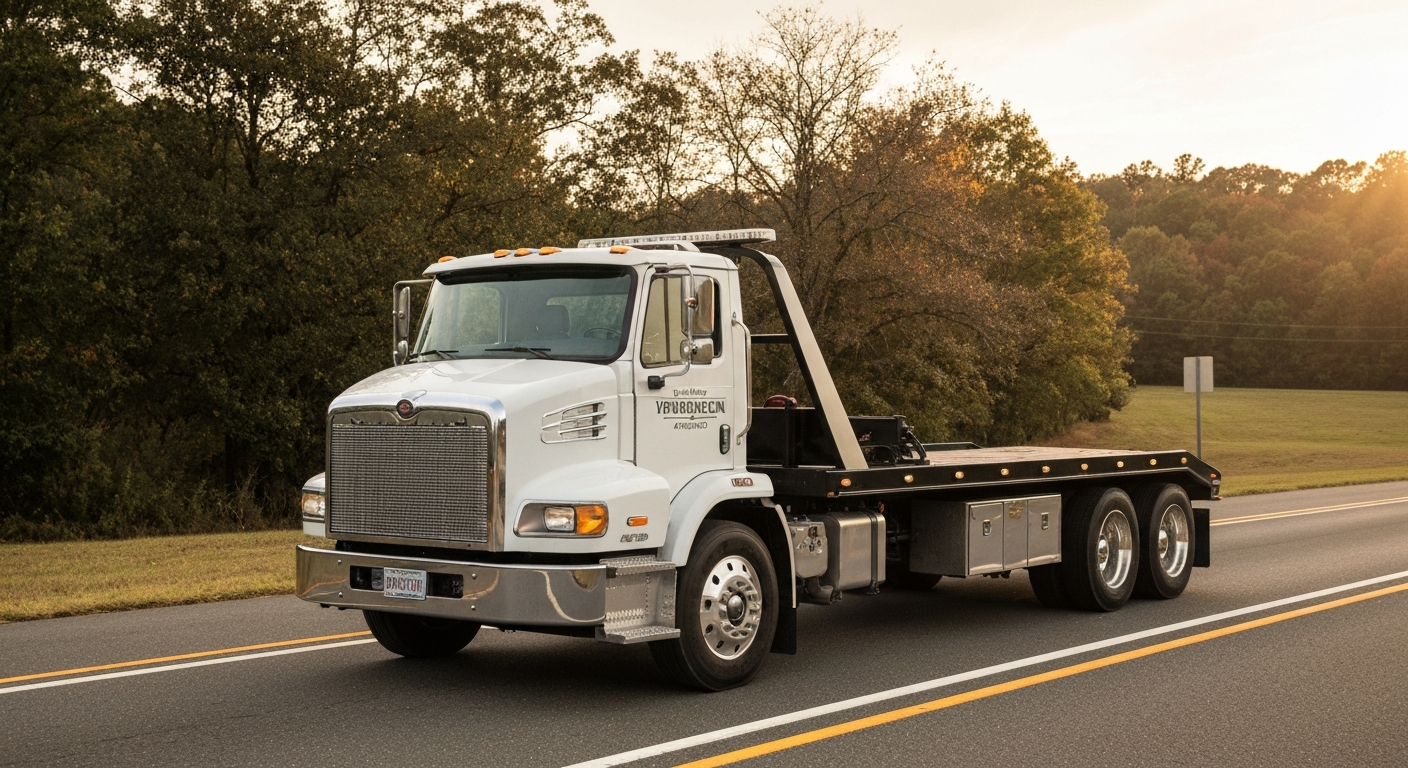
The truck is your biggest single expense. A used flatbed in decent mechanical condition runs $30,000–$80,000. A used wrecker capable of handling heavier vehicles can hit $100,000 before you’ve turned a key in anger. New trucks are significantly more. Many operators start with one truck and finance it, which works — just factor in the monthly payment against your revenue projections.
Insurance is the recurring cost that surprises people. An $8,000–$20,000 annual package sounds like a lot until you see what a single at-fault accident or damaged vehicle claim costs without it. Shop multiple commercial insurers who specialize in towing — standard commercial auto insurers often won’t write towing policies or will price them punitively.
The storage lot is non-negotiable if you want to do police rotation work or hold vehicles from accident scenes. Secure fencing, lighting, and enough space to hold multiple vehicles are baseline requirements. Leases vary wildly by location — Northern Virginia is expensive; rural southwest Virginia is not.
Getting on Police Rotation Lists
No guide to starting a towing business in Virginia would be complete without addressing this. Police rotation work is the backbone of a stable towing operation. It’s predictable, consistent volume — accidents, abandoned vehicles, DUI impounds — and it doesn’t require you to build a customer base from scratch.
Getting on a locality’s rotation list requires meeting their specific requirements, which go beyond state licensing. Most jurisdictions want to see:
- Your Board of Towing operator license (Class A or B, depending on what they need)
- Current certificates of insurance meeting their minimums
- A local storage facility that meets their standards
- Background checks on drivers
- Response time commitments — often 30 minutes or less
Each police department or sheriff’s office manages its own rotation list. Contact them directly. Some localities have waiting lists; others have open enrollment. Either way, building a relationship with the department before you apply doesn’t hurt.
Your Path Forward
Start with the Virginia SCC to form your LLC, then move to the Board of Towing and Recovery Operators for your operator license. Do those in parallel with getting your DCJS driver registration sorted — don’t wait until the business license arrives to start that process.
Before you buy a truck, confirm your insurance quotes. The range is wide, and the actual number you’ll pay depends on your driving record, the vehicle, your location, and the coverage limits you choose. Get three quotes minimum from insurers who actually write towing policies regularly.
And then call your local police department and ask how their rotation list works. That conversation will tell you more about the real requirements in your specific market than any state-level document.
The Board of Towing and Recovery Operators can be reached through the Virginia Department of Motor Vehicles, which provides administrative support. For DCJS questions, visit dcjs.virginia.gov directly. For SCC filings, use cis.scc.virginia.gov. For tax registration, tax.virginia.gov.
The barrier to entry in towing is real — mostly financial, partly regulatory. But the demand is consistent, the margins on police rotation work are solid, and the operators who stay compliant and show up reliably tend to build durable businesses.