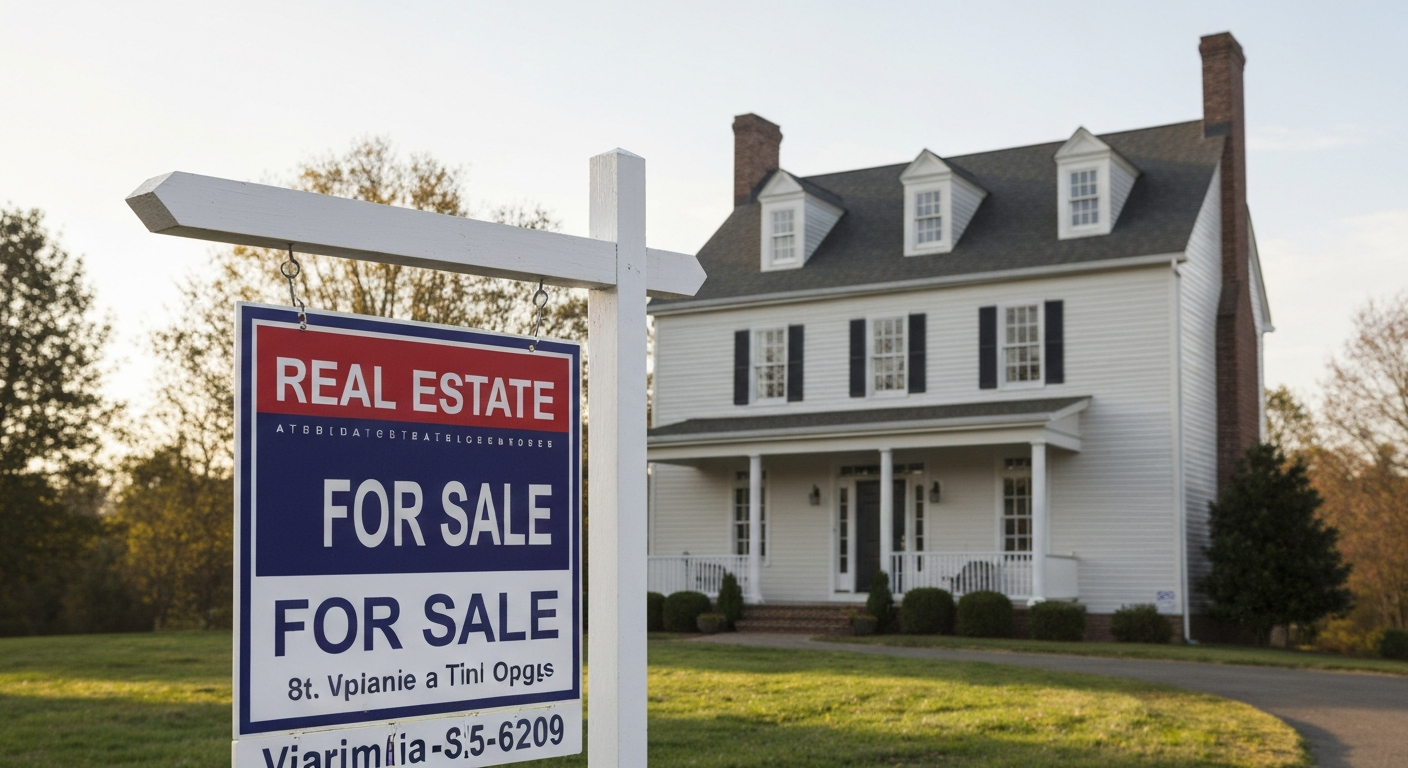
How to Start a Real Estate Business in Virginia
How to Start a Real Estate Business in Virginia
Virginia has about 40,000 active real estate licensees. Most of them are salespersons — agents who work under a broker and collect a commission split. A much smaller number are brokers, and fewer still own their own firm.
If you want to start a real estate business — meaning you want to own the brokerage, hire agents, and keep the desk fees — that’s a different path than just getting your agent license. Both paths run through the same agency: DPOR’s Real Estate Board (REBO). But the requirements, timeline, and costs are completely different.
This guide covers both. The agent path first, because you have to walk it before you can run the broker path.
Salesperson License (Agent Path)
DPOR’s Real Estate Board handles all real estate licensing in Virginia. Their site is dpor.virginia.gov/Boards/Real-Estate, and that’s where you’ll find approved education providers, application forms, and exam information.
Step 1: Complete 60 hours of pre-licensing education.
Virginia requires 60 hours of pre-licensing coursework from a DPOR-approved provider before you can sit for the exam. This isn’t a weekend class. The curriculum covers Virginia real estate law, contracts, agency relationships, fair housing, and the mechanics of how transactions actually work. Most providers offer it online now, so you can move at your own pace — but expect to spend several weeks on it, not several days.
Costs vary. Online self-paced courses run $100-$300. In-person or instructor-led programs can reach $500. Shop around, but make sure the provider is on DPOR’s approved list, or the hours won’t count.
Step 2: Pass the licensing exam.
Virginia uses a two-part exam: a national portion covering general real estate principles, and a state-specific portion covering Virginia law and DPOR regulations. You need to pass both. PSI administers the exam in Virginia; you’ll schedule through their site after completing your education requirement.
Passing scores are published per exam session. If you fail one portion, you only retake that portion — you don’t start over completely. Exam fee is around $60 each attempt.
Step 3: Understand what a salesperson license actually means.
A Virginia salesperson license does not let you operate independently. Full stop. You must work under a licensed Virginia broker to activate your license and practice real estate. You can’t represent buyers or sellers on your own, can’t collect commissions directly from clients, and can’t open your own shop.
This isn’t a technicality. It’s the design of the system. The broker is legally responsible for your transactions. When you’re starting out, that’s actually useful — you’re operating under a professional umbrella while you build skills and accumulate the experience you’ll eventually need if you want to own a brokerage.
Broker License (Brokerage Owner Path)
The broker license is what separates agents from business owners. You need it to open your own firm, supervise other agents, and operate independently. And you can’t skip ahead to it — Virginia requires real, documented time working as a salesperson first.
The education requirement: 180 hours.
Broker candidates must complete 180 hours of DPOR-approved broker education. This is three times the salesperson requirement and substantially more demanding in content. The courses cover brokerage management, real estate law at a deeper level, contracts and financing, property management, and broker-specific regulations.
These aren’t the same 60 hours recycled with extra padding. The curriculum is different. You’re preparing to supervise transactions and agents, not just work in them.
Pass the broker exam.
Like the salesperson exam, the broker exam has national and state portions. The content is harder — more emphasis on legal liability, brokerage operations, and the kinds of decisions you’ll make running a firm. Same PSI testing system, same two-part structure, same retake rules.
The 36-month experience requirement — and why it matters.
Here’s the one that catches people off guard: before REBO will approve your broker license application, you must have been actively engaged as a licensed real estate salesperson for 36 of the 48 months immediately preceding your application. Not just licensed. Actively engaged — meaning you were actually working transactions, not sitting on an inactive license.
Three years. That’s the floor. There’s no workaround, no equivalency credit for prior business experience, no fast track for people with finance backgrounds. If you got your salesperson license six months ago and are already thinking about opening your own shop, the clock is ticking — but you have a minimum of 30 more months before you’re eligible.
Submit experience verification to REBO.
When you apply for your broker license, you don’t just self-certify the 36 months. REBO requires experience verification — documentation showing your active engagement as a salesperson during the qualifying period. Your supervising broker will typically sign off on this. Keep records: transaction history, any documentation of active practice. This is not the stage to be disorganized.
Firm License
Your individual broker license gets you the right to practice as a broker. It does not, by itself, authorize you to operate a real estate brokerage. For that, you need a firm license from REBO. These are two separate licenses, and you need both.
Every brokerage requires a firm license.
REBO issues firm licenses to real estate businesses operating in Virginia. The firm license is tied to your business, not just to you as an individual. If you want to hang a shingle, hire agents, and operate as a brokerage, you apply for the firm license through DPOR.
The principal broker requirement.
Every licensed real estate firm in Virginia must have a designated principal broker. That broker’s license must be in good standing — active, not under suspension or disciplinary action. For a solo brokerage startup, this is typically you. You apply for your broker license, get it approved, then apply for the firm license naming yourself as principal broker.
The principal broker carries significant legal responsibility. They’re accountable for the firm’s compliance with VREB regulations, for supervising affiliated agents, and for the overall conduct of the brokerage. If your agents cut corners, the principal broker is on the hook.
Business name and address disclosure.
Your firm license application requires you to disclose your business name and physical business address. Virginia doesn’t allow phantom offices. You need a real location — a place where records can be maintained and where clients could theoretically reach you. For a solo startup, this might be a small office, a shared workspace, or a dedicated home office space. Check local zoning rules if you’re working from home; not every municipality allows client-facing real estate businesses in residential zones.
Branch offices need their own licenses.
If you eventually expand and open a second location, that branch office requires its own separate firm license from REBO. This isn’t a formality — each location is separately licensed, separately responsible, and needs its own supervision structure. Plan for the licensing cost and lead time before you sign a second lease.
Contact REBO directly with questions.
For firm licensing questions, principal broker changes, or anything that the DPOR website doesn’t answer clearly, call REBO at (804) 367-8526. They field questions about applications in process, experience verification requirements, and firm license specifics.
Business Structure and Costs
Licensing is the regulatory side of starting a real estate business. The business side runs parallel — and it has its own costs and requirements.
Form your business entity.
Most Virginia real estate brokerages operate as LLCs. It provides liability separation between you personally and the business, it’s simple to maintain, and it looks professional to agents you’ll recruit and clients you’ll serve.
Virginia LLC formation costs $100 to file Articles of Organization with the State Corporation Commission (SCC) at cis.scc.virginia.gov. After that, you owe $50 per year in annual registration fees. That’s a low bar. No franchise tax, no minimum revenue fee — just $50/year to stay in good standing.
One important note: your LLC name and your real estate firm name may need to align for REBO purposes. Check DPOR’s requirements for trade name registration if you’re operating under a name different from your legal entity name. SCC charges $10 for fictitious/trade name registration.
BPOL license from your local jurisdiction.
Virginia has no statewide general business license. Business licensing is entirely local, through the Business, Professional, and Occupational License (BPOL) system administered by each city or county. Rates and thresholds vary — some localities exempt businesses below a gross receipts threshold, others charge from dollar one.
Contact your city or county’s Commissioner of Revenue office to find out what’s required and what it costs. This is non-optional. Operating without your local BPOL when one is required creates compliance exposure.
E&O insurance: practically required.
Errors and Omissions (E&O) insurance covers you and your firm if a client claims you made a professional mistake that cost them money. Virginia doesn’t legally mandate E&O at the state level for all brokerages, but most MLS (Multiple Listing Service) boards require it for membership. And since MLS access is essentially mandatory for a functioning residential real estate business, E&O is functionally required.
Annual premiums for a small brokerage run $1,500-$3,000 depending on coverage limits, the number of agents affiliated with your firm, and your transaction volume. Shop multiple providers — real estate E&O is a competitive market. Some national carriers specialize in it.
Realistic startup cost ranges.
There’s a wide range here depending on how you’re setting up:
Solo brokerage, no physical office: Budget $10,000-$30,000 to get started. That covers state licensing fees, LLC formation, local licensing, E&O insurance, MLS membership dues, NAR membership (if applicable), your website and basic marketing, and a technology stack for transaction management and CRM. It’s lean, but it’s workable.
Brokerage with a physical office: $30,000-$100,000, and the variance is almost entirely real estate-related costs — lease deposits, build-out, signage, furniture, and the month-or-more of rent you’ll burn before you close your first transaction as the brokerage owner. Add agent onboarding technology, training materials, and whatever split structure you’re offering, and the costs add up fast.
Neither of these includes your living expenses during the ramp-up period. Real estate brokerage revenue is transaction-based. Your first several months as a firm owner, you may close personal transactions but generate little or nothing from affiliated agents. Budget accordingly.
The Path in Sequence
Since the timeline here matters, it’s worth laying out the full sequence clearly:
- Complete 60 hours of pre-licensing education
- Pass the salesperson exam (national + state portions)
- Affiliate with a licensed Virginia broker — work actively under them
- Complete 36 months of active salesperson experience (out of the preceding 48 months)
- Complete 180 hours of broker education
- Pass the broker exam
- Apply for broker license through DPOR; submit experience verification
- Form your LLC with the SCC ($100)
- Apply for a firm license from REBO, naming yourself as principal broker
- Obtain BPOL license from your local jurisdiction
- Secure E&O insurance
- Join your local MLS and any applicable REALTOR association
Steps 1-3 can happen in a few months. Steps 4-7 take a minimum of three years from when you activate your salesperson license. The broker education and exam can be completed during that period — there’s no rule that says you have to wait until month 36 to start studying.
Use the time. Work transactions. Learn how deals actually fall apart. Understand what title companies do, how lenders think, what kills closings. The 36-month requirement isn’t arbitrary busywork — the brokers who open firms without real experience tend to find out why it exists.
DPOR’s Real Estate Board site at dpor.virginia.gov/Boards/Real-Estate has the current fee schedule, approved education providers, and application forms. For questions specific to your situation — particularly around experience verification or firm license structure — call REBO directly at (804) 367-8526. They’re the authoritative source, and the rules do occasionally change.