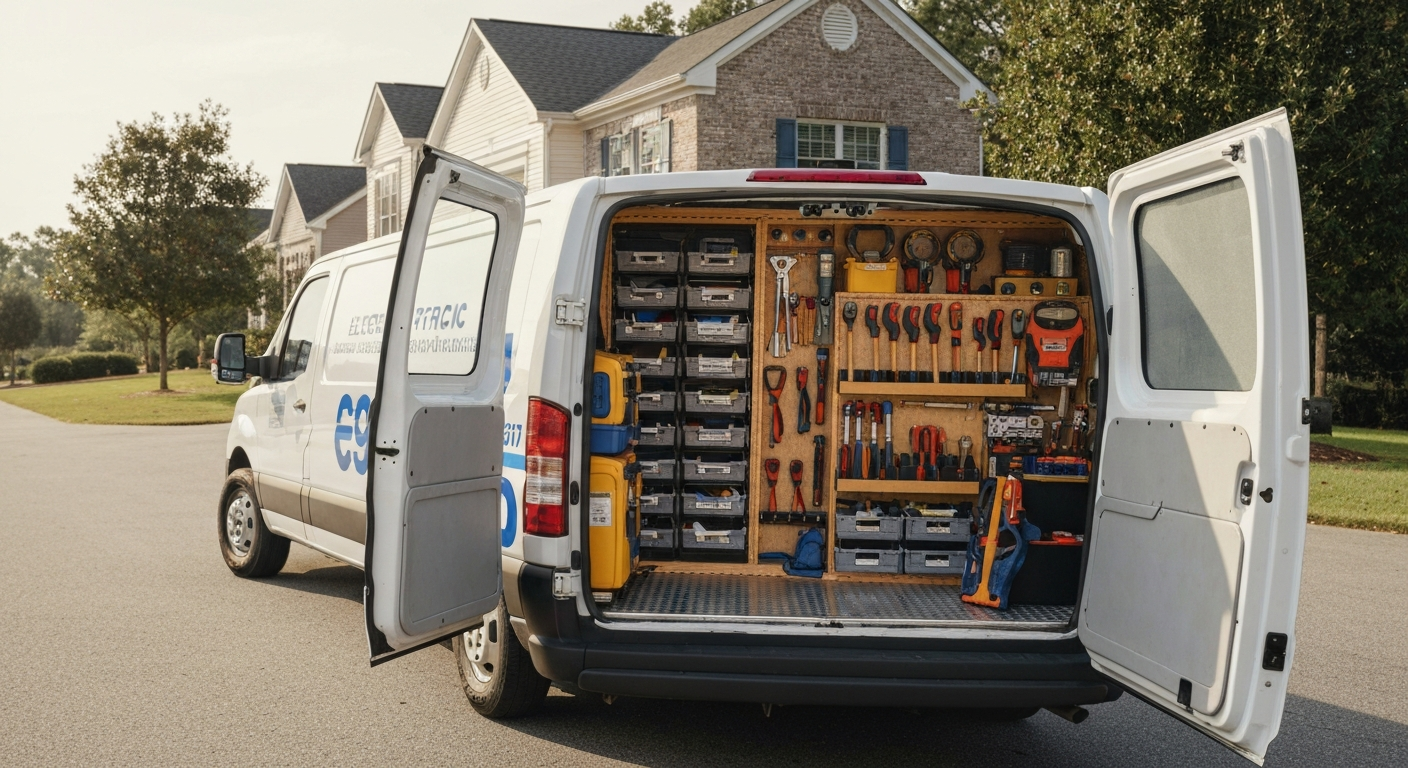
How to Start an Electrician Business in Virginia
How to Start an Electrician Business in Virginia
Virginia has two entirely separate licenses you need before you can legally run an electrical contracting business. One proves you can do the work. The other proves you can run the business. Most electricians have the first. Almost nobody tells them about the second until they’re already in trouble.
Here’s what that actually means in practice: your DPOR journeyman or master electrician license is your tradesman license — it certifies your individual competency. Your DPOR contractor license (Class C, B, or A) is what legally authorizes you to enter into contracts with clients for electrical work. Without both, you’re not legal to operate, even if you’re the most skilled electrician in the county.
This guide walks through exactly how to go from licensed electrician to licensed electrical contractor in Virginia, including the fees, the insurance requirements, and what it actually costs to get started.
Virginia’s Two-License System for Electricians
The Virginia Department of Professional and Occupational Regulation (DPOR) runs both licenses through the same Board for Contractors, but they serve completely different functions.
The tradesman license — journeyman or master — is about individual competency. It says you know how to safely wire a building. The Board’s Tradesmen Program issues these, and they’re tied to you personally. Your employer can’t use your license; only you can work under it.
The contractor license — Class C, B, or A — is about business competency. It says your company is authorized to contract for electrical work in Virginia. This license is held by the business entity and requires a Qualified Individual (QI) — someone with the relevant tradesman license — to be listed on the contractor license application. That QI is almost always you.
You need both to run your own shop. There’s no workaround. Virginia law requires a contractor license for any project over $1,000 in combined labor and materials. That threshold catches essentially every real electrical job.
Tradesman License Requirements
Journeyman electrician:
- 4 years of practical experience plus 240 hours of formal vocational training (from an apprenticeship program, community college, or similar)
- OR 9 years of practical experience if you don’t have the formal training hours
Master electrician:
- 1 year as a licensed journeyman electrician
- OR 10 years of practical experience without a journeyman license
The fees are straightforward. Tradesman license: $130. Exam fee: approximately $100 for journeyman, approximately $125 for master. These are separate payments — the license fee goes to DPOR, the exam fee goes to the testing vendor.
If you’re already a licensed journeyman with a few years under your belt, the contractor license path is shorter than you think. Your field experience counts toward the contractor experience requirements. Nothing resets.
Journeyman and Master Exam Details
Both exams are administered by PSI, the national testing provider DPOR uses for most of its trade licenses. You schedule through PSI’s website after DPOR approves your application.
Journeyman exam: 70 questions, 3.5 hours, 70% passing score. You need 49 correct answers to pass.
Master exam: 90 questions, 4.5 hours, 70% passing score. You need 63 correct answers.
Both exams are open-book for the National Electrical Code (NEC) — you can bring your copy. What you can’t do is walk in cold. The exams are code-heavy, and knowing where to look fast is its own skill. Most candidates who fail do so on time, not knowledge.
Study materials matter here. The Virginia-specific content covers state amendments to the NEC. Several prep courses exist online; budget a weekend of focused prep minimum, more if you’ve been out of the code book for a while.
After you pass, your tradesman license needs to be renewed every three years. The renewal requirement is 3 hours of continuing education per year — so 9 hours total per renewal cycle. Don’t wait until month 35 to figure that out.
Questions about the application process or exam eligibility? DPOR’s licensing section handles it directly: (804) 367-8511. They’re genuinely helpful if you call during business hours with a specific question.
Adding the Contractor License
This is the piece most working electricians don’t have. You’ve spent years doing excellent work as an employee or subcontractor, and the contractor license never came up because someone else held it. Now you’re starting your own business, and it’s the first thing you need to get right.
Virginia has three contractor license classes based on project size:
Class C — The Solo Operator Tier
- Projects up to $10,000 per contract
- Fee: $235
- Experience required: 2 years
- Net worth requirement: none
- Exam: none
Class C is where most people starting a residential electrical business begin. Two years of verifiable experience, $235, no financial threshold. If you’re going solo on smaller residential jobs — service panels, outlets, lighting, basic rewiring — Class C covers you. Your journeyman experience counts toward those 2 years.
Class B — The Mid-Size Tier
- Projects up to $120,000 per contract
- Fee: $370
- Experience required: 3 years
- Net worth requirement: $15,000 minimum
Class B opens you up to commercial work, larger residential projects, and anything that requires a bigger budget. The net worth requirement is real — DPOR will ask for a financial statement. $15,000 net worth isn’t a huge bar, but you need to be able to document it. A business bank account and basic equipment can get you there.
Class A — Full Commercial and Large Projects
- Projects over $120,000 per contract
- Fee: $385
- Experience required: 5 years
- Net worth requirement: $45,000 minimum
Class A is what you need to bid on serious commercial projects. The $45,000 net worth requirement is the real gate — not the fee, not the experience. If you’re starting out, Class C or B makes more sense. You can upgrade your classification later.
Pre-License Education (Required for All Three)
Every contractor license applicant — Class C, B, or A — must complete 8 hours of pre-license education before applying. This covers business and law fundamentals: contracts, lien law, project management basics, worker classification, and Virginia-specific contractor regulations. It’s not a technical exam; it’s about running a business legally.
These courses are widely available online and in person. Most run $200-$400. Some providers offer them in a single day. Do this before you submit your contractor license application — DPOR won’t process it without proof of completion.
Apply through DPOR at dpor.virginia.gov. The same portal handles both your tradesman and contractor license applications.
Insurance Requirements
Getting licensed is the legal minimum. Being insurable at the right levels is what actually gets you jobs — especially commercial work and anything through a property management company or general contractor.
General liability insurance is non-negotiable. The standard minimum for electrical contractors is $1 million per occurrence. Most commercial clients, property managers, and GCs will ask for a certificate of insurance before you touch a job site. Some will require $2 million aggregate. Budget accordingly. General liability for an electrical contractor runs $1,500-$4,000/year depending on your revenue and claims history.
Workers’ compensation becomes required in Virginia once you have 3 or more employees — and that count includes part-time workers, seasonal workers, and even employees of subcontractors you hire. The threshold is easier to hit than most small contractors realize. If you’re solo, you’re exempt. Add two helpers and a subcontractor’s employee shows up on site — suddenly you’re over the line. The Virginia Workers’ Compensation Commission handles this at workcomp.virginia.gov. Non-compliance penalties run up to $250/day, with a maximum of $50,000 plus costs. Get the coverage before you need it.
Commercial auto insurance covers your service vehicles. Personal auto policies typically exclude business use. One at-fault accident in a company truck without commercial coverage can wipe out a small business. This isn’t optional.
Tools and equipment coverage protects against theft and damage to your gear — meters, drills, conduit benders, wire reels, specialty test equipment. Electrical tools are expensive and they disappear on job sites. Most policies cover replacement value.
Errors and omissions (professional liability) covers claims arising from faulty or incomplete work. Electrical mistakes can be catastrophic — fires, code violations, failed inspections that cost clients money. E&O isn’t always required, but it’s worth having if you’re doing any commercial or industrial work.
Total insurance budget: $4,000-$12,000/year. The low end is a solo operator doing residential work with one vehicle. The high end reflects a small crew, commercial work, and multiple vehicles. Get quotes from carriers that specialize in electrical contractors — they understand the risk profile better than general business insurers.
Don’t Forget the Local License
Virginia has no statewide general business license. Instead, every city and county runs its own licensing system under the Business, Professional, and Occupational License (BPOL) program. This is a separate requirement from your DPOR licenses — it’s administered locally, not by the state.
BPOL is based on gross receipts, not net income, and each locality sets its own rates and minimums. Some jurisdictions have a flat minimum fee for new businesses in their first year. Others charge based on projected revenue. You’ll need to contact your city or county’s Commissioner of Revenue office to get the specifics for where you’re based.
If you work across multiple jurisdictions — say you’re headquartered in Chesterfield but take jobs in Richmond and Henrico — you typically only need the BPOL license in your home jurisdiction. But verify this locally. The rules vary.
Startup Costs at a Glance
Here’s what you’re actually looking at to get an electrical contracting business off the ground in Virginia, as a solo operator starting at Class C:
| Item | Cost |
|---|---|
| LLC formation (Articles of Organization) | $100 |
| Annual LLC registration fee | $50/year |
| Tradesman license (if not yet licensed) | $130 + ~$100-125 exam fee |
| Contractor license (Class C) | $235 |
| Pre-license education | $200-$400 |
| BPOL license | Varies by locality |
| General liability insurance | $1,500-$4,000/year |
| Total insurance (all lines) | $4,000-$12,000/year |
| Service vehicle | $20,000-$40,000 |
| Tools and test equipment | $5,000-$15,000 |
Realistic total to start, solo Class C operation: $10,000-$25,000. That range assumes you already have a vehicle or can finance one, and it doesn’t include working capital for materials you’ll front before client payment.
The licensing fees themselves are not the barrier. $235 for a Class C contractor license is nothing. The capital requirements are the vehicle, the tools, and the insurance. Those are the real startup costs.
The Order of Operations
Do this in sequence and you avoid most of the common mistakes:
-
Confirm your tradesman license status. If you’re already a licensed journeyman or master electrician in Virginia, you’re ahead. If not, apply to DPOR first — you can’t list yourself as the Qualified Individual on a contractor license without one.
-
Complete the 8 hours of pre-license education. Get your completion certificate before you apply for the contractor license. Online courses are fine; most take one day.
-
Form your LLC. File your Articles of Organization through the Virginia SCC at cis.scc.virginia.gov. It’s $100. Takes a few business days online. You’ll need the LLC name for your contractor license application.
-
Apply for your contractor license. File through dpor.virginia.gov with your pre-license certificate, proof of experience, and the application fee. For Class B or A, include your financial statement.
-
Get your insurance in place. You’ll need proof of general liability to activate your contractor license and to bid most jobs.
-
Register with the Virginia Department of Taxation at tax.virginia.gov if you’ll have employees or charge sales tax on materials.
-
Get your BPOL license from your local city or county.
The whole process — assuming you’re already a licensed tradesman — takes 4-8 weeks from LLC formation to fully licensed and insured. The DPOR application is the longest part. Don’t let it sit.
Starting an electrical contracting business in Virginia is straightforward once you understand the two-license structure. The tradesman license is probably already in your wallet. The contractor license is what you’re missing. Get the 8 hours of pre-license education done this weekend, file your LLC online next week, and submit your contractor application before the month is out. The hardest part of running your own electrical business isn’t the licensing — it’s finding the first three clients. The paperwork is just paperwork.