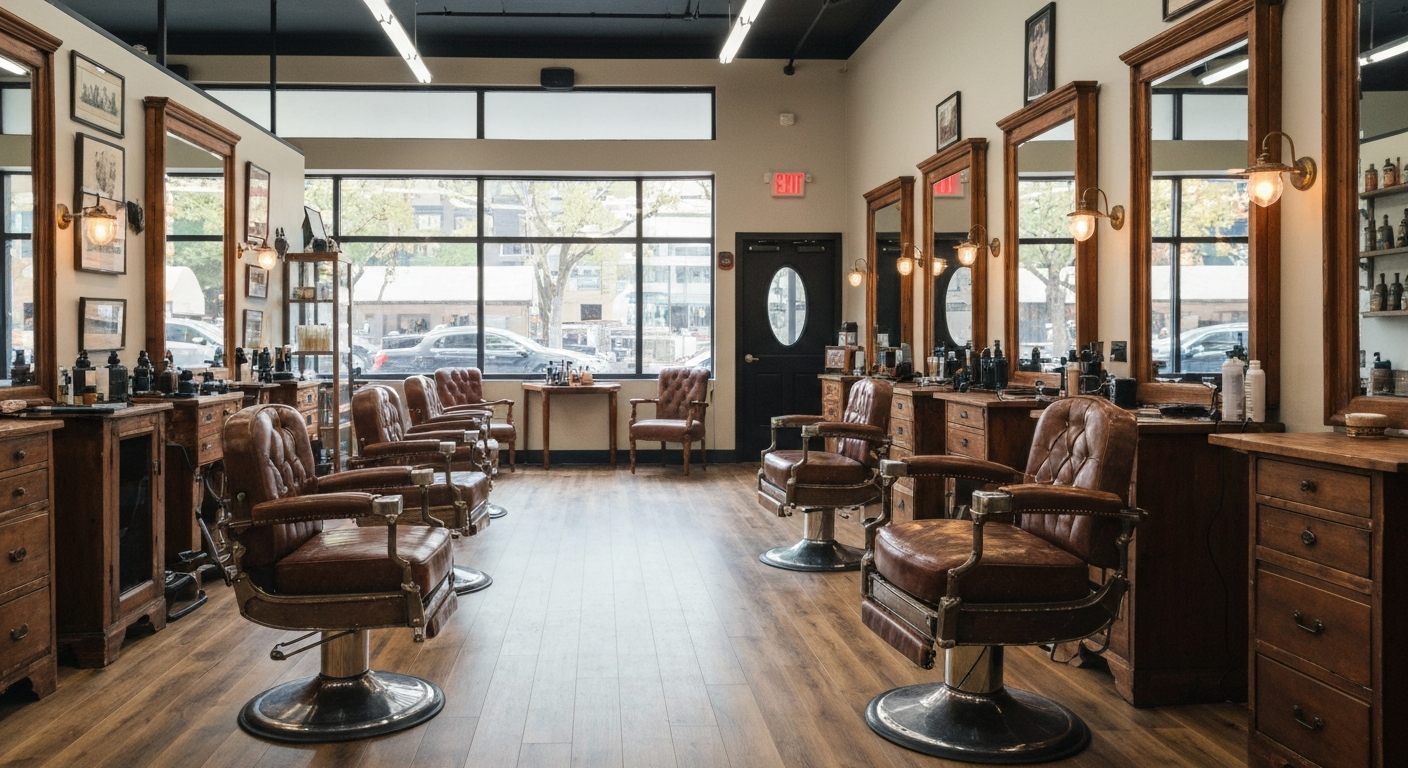
How to Start a Barbershop Business in Virginia
How to Start a Barbershop Business in Virginia
Virginia licenses barbershops through DPOR’s Board for Barbers and Cosmetology — the same board that handles cosmetology salons, but with separate requirements, separate fees, and a separate license category. That distinction matters because the rules for barbershops aren’t the same as the rules for salons, and mixing them up early can slow your opening down by weeks.
Here’s what the path actually looks like: get your business entity set up, secure your space, apply for the barbershop facility license, make sure every barber on your floor is individually licensed, and pass your DPOR inspection before your first paying customer sits down. The $220 shop license surprises most people — it’s more than the cost to file your LLC. The 45-day processing window surprises them even more.
Plan for both.
DPOR Barbershop License
The barbershop facility license costs $220 for the initial application, issued by the DPOR Board for Barbers and Cosmetology. This is the license for the physical location — the shop itself. It’s separate from the licenses that individual barbers carry.
One important clarification: you do not need to be a licensed barber to own a barbershop. If you’re opening as an investor or business owner without cutting hair yourself, that’s fine. But every barber who performs services in your shop must hold an active individual Virginia barber license. No exceptions, and DPOR inspectors will check.
Let the license lapse and you’re looking at a $440 reinstatement fee — exactly double the initial cost. That’s the kind of administrative penalty that’s easy to avoid if you calendar your renewal date the day the license arrives.
What DPOR Inspectors Check
Before your shop license is approved and after you’re operating, DPOR will inspect your facility. The checklist focuses on:
Sanitation. Clean tools, sterilization equipment, properly labeled containers for used implements. Barbers are required to sanitize tools between every client. DPOR inspectors take this seriously — a shop that looks sloppy on sanitation is a shop that gets cited.
Ventilation. The space needs adequate airflow. If you’re converting a retail storefront with no existing HVAC, factor this into your build-out budget. A cramped basement space with no ventilation won’t pass.
Hot and cold running water. Running water must be accessible in the service area. Unlike full-service salons, barbershops don’t require shampoo bowls in all configurations — one reason build-out costs run lower than cosmetology salons. But you do need accessible plumbing.
Waste disposal. Proper containers for used blades, hair, and chemical waste if applicable. This is straightforward to comply with but must be in place before inspection.
License display. The shop license must be displayed in a prominent location visible to clients. Same requirement applies to every individual barber — their license needs to be on display at their station. DPOR inspectors will look for both.
Apply through dpor.virginia.gov and budget for the full 45 days from application to approval. Don’t sign a lease that starts the clock before you’re ready to move quickly on the build-out. That 45-day window is real, and it doesn’t compress because you’re in a hurry.
DPOR’s contact for barber and cosmetology licensing: (804) 367-8509 or [email protected].
Individual Barber License
Each barber working in your shop needs their own Virginia barber license. If you’re hiring, this is the first question to ask every candidate: are you currently licensed in Virginia, or do you have a license from another state that needs to be transferred?
The Training Requirement
1,100 hours at a DPOR-approved barber program. That’s the standard path — roughly 9-12 months at a full-time barber school. The alternative is a 2,000-hour apprenticeship completed over at least 18 months under a licensed barber. The apprenticeship route works but takes longer. Most people go the school route.
Compare this to cosmetologists, who need 1,500 hours. The 400-hour difference is meaningful — it means the pipeline to licensed barbers is shorter, and barber school graduates typically have lower tuition debt than cosmetology graduates. If you’re recruiting, that’s worth knowing.
Fees
- Application fee: $105
- Written exam: $99
- Practical exam: $95
Total licensing cost for a new barber: around $299 in fees alone, on top of tuition. When you’re negotiating booth rental rates or employment terms, keep these upfront costs in mind — barbers who just finished school have already spent real money getting to your chair.
The applicant must be at least 18 years old.
Renewals
Virginia barber licenses renew every two years. Here’s the notable part: there is no continuing education requirement for barbers in Virginia. Zero hours. This is a genuine difference from cosmetologists in some states and from other licensed trades. Barbers just pay the renewal fee and keep working.
That simplicity is good for your staff retention — nobody’s scrambling for CE credits before a renewal deadline. But it also means your shop’s quality standards are self-imposed. Build your own in-house training culture; DPOR won’t require it for you.
Business Structure and Costs
Forming Your Business Entity
Before you sign a lease, form your business entity. Most barbershop owners go with an LLC — it separates your personal assets from the business and costs $100 to file with the Virginia State Corporation Commission. Annual registration fee is $50/year. That’s it. File online through the SCC’s Clerk’s Information System.
Get your EIN (Employer Identification Number) from the IRS immediately after formation. It’s free at irs.gov/ein and takes about 10 minutes online. You’ll need it to open a business bank account, hire employees, and handle payroll taxes.
Local Business License (BPOL)
Virginia doesn’t have a statewide business license. Licensing is handled locally through each city or county’s BPOL (Business, Professional, and Occupational License) system. Once you know your location, contact that city or county’s Commissioner of the Revenue office to find out the rate and minimum for personal service businesses. BPOL is based on gross receipts, so the cost scales with your revenue. First-year minimums are usually modest, but you need the license before you open.
Build-Out Reality
The physical space is where most of your capital goes. Barbershops have a real cost advantage over full-service salons: the plumbing requirements are simpler. No shampoo bowls in every station means less rough plumbing, fewer drains, and lower contractor costs. If you’re taking over an existing barbershop space, your build-out costs can drop significantly.
Starting from a raw retail shell:
Full build-out (4 to 8 stations): $15,000–$50,000. This includes framing, electrical, plumbing for a utility sink, flooring, lighting, mirrors, and wall finishes. If the space already has some of this infrastructure, you’re on the lower end.
Barber chairs: Quality barber chairs run $750–$1,500 each. A 4-chair shop needs $3,000–$6,000 in chairs alone. An 8-chair shop, $6,000–$12,000. Don’t cheap out on chairs — a $300 chair that wobbles or breaks costs you in repairs, client complaints, and barber morale.
Equipment and supplies: Clippers, trimmers, sterilization equipment, styling products, towels, capes, dispensing bottles, cleaning supplies. Budget $1,000–$3,000 to stock a shop properly from day one.
Signage, waiting area furniture, POS system: Often forgotten in initial budgets. A decent point-of-sale setup with booking integration runs $50–$150/month. Add another $1,000–$3,000 for waiting area chairs, a reception desk if you want one, and exterior signage.
Insurance and Total Startup Costs
Insurance You Actually Need
General liability insurance covers slip-and-fall incidents, customer injuries, and property damage claims. For a barbershop, expect $400–$1,000/year depending on your location, revenue, and number of employees. This is non-negotiable — one slip on a wet floor can cost more than your entire first year of premiums.
Property insurance covers your equipment, build-out improvements (if you own them under your lease), and business contents. If you’ve put $30,000 into a build-out and a pipe bursts, property insurance is the difference between a setback and a closure. Your landlord’s insurance covers the building structure — not your equipment or leasehold improvements.
Workers’ compensation becomes legally required in Virginia as soon as you have 3 or more employees. This includes part-time and seasonal workers. If you’re running a solo chair or a two-person operation, you’re exempt. But the moment you bring on a third person — employee, not booth renter — you need workers’ comp coverage. The Virginia Workers’ Compensation Commission handles this: workcomp.virginia.gov.
Note on booth renters: independent contractors renting booth space from you are not your employees. That changes your workers’ comp threshold calculation. But get the booth rental agreements in writing and make sure they’re structured correctly — misclassifying employees as contractors is a real liability.
Total Startup Cost Ranges
Lean 4-chair shop (existing buildout, minimal renovation, 4 chairs, owner-operator model):
- Build-out and improvements: $8,000–$15,000
- Chairs and equipment: $4,000–$9,000
- Licenses, fees, and formation: $500–$1,000
- Insurance (first year): $500–$1,000
- Working capital (3 months): $5,000–$10,000
- Total: $18,000–$36,000
Mid-range 6 to 8 chair shop (partial buildout required, more chairs, some employees):
- Build-out and improvements: $20,000–$40,000
- Chairs and equipment: $8,000–$18,000
- Licenses, fees, and formation: $1,000–$1,500
- Insurance (first year): $800–$2,000
- Working capital (3 months): $10,000–$20,000
- Total: $40,000–$81,500
These ranges are honest estimates, not best-case scenarios. Real costs depend heavily on your specific location, the condition of the space you’re taking, and whether you’re hiring employees or running a booth-rental model.
The Sequence That Actually Works
Don’t apply for your barbershop license before you have a physical address — DPOR needs the facility location as part of the application. And don’t sign a long-term lease before you’ve confirmed the space can meet DPOR’s sanitation and plumbing requirements.
The order that tends to work:
- Form your LLC with the Virginia SCC and get your EIN.
- Find your space. Get a letter of intent or short conditional period before committing to a full lease.
- Confirm the space meets DPOR facility requirements (or budget what it will take to get there).
- Sign the lease. Start the build-out.
- Apply for the DPOR barbershop facility license. Start the 45-day clock.
- Apply for your local BPOL license.
- Confirm that every barber you’re hiring holds an active Virginia license — verify on dpor.virginia.gov before their first day.
- Pass your DPOR inspection.
- Open.
The biggest mistake first-time shop owners make is assuming they can compress the licensing timeline. You can’t. DPOR processes applications on their schedule. Build the 45 days into your opening plan, and open on time instead of scrambling.