How to Start a Bar or Brewery Business in Virginia
How to Start a Bar or Brewery Business in Virginia
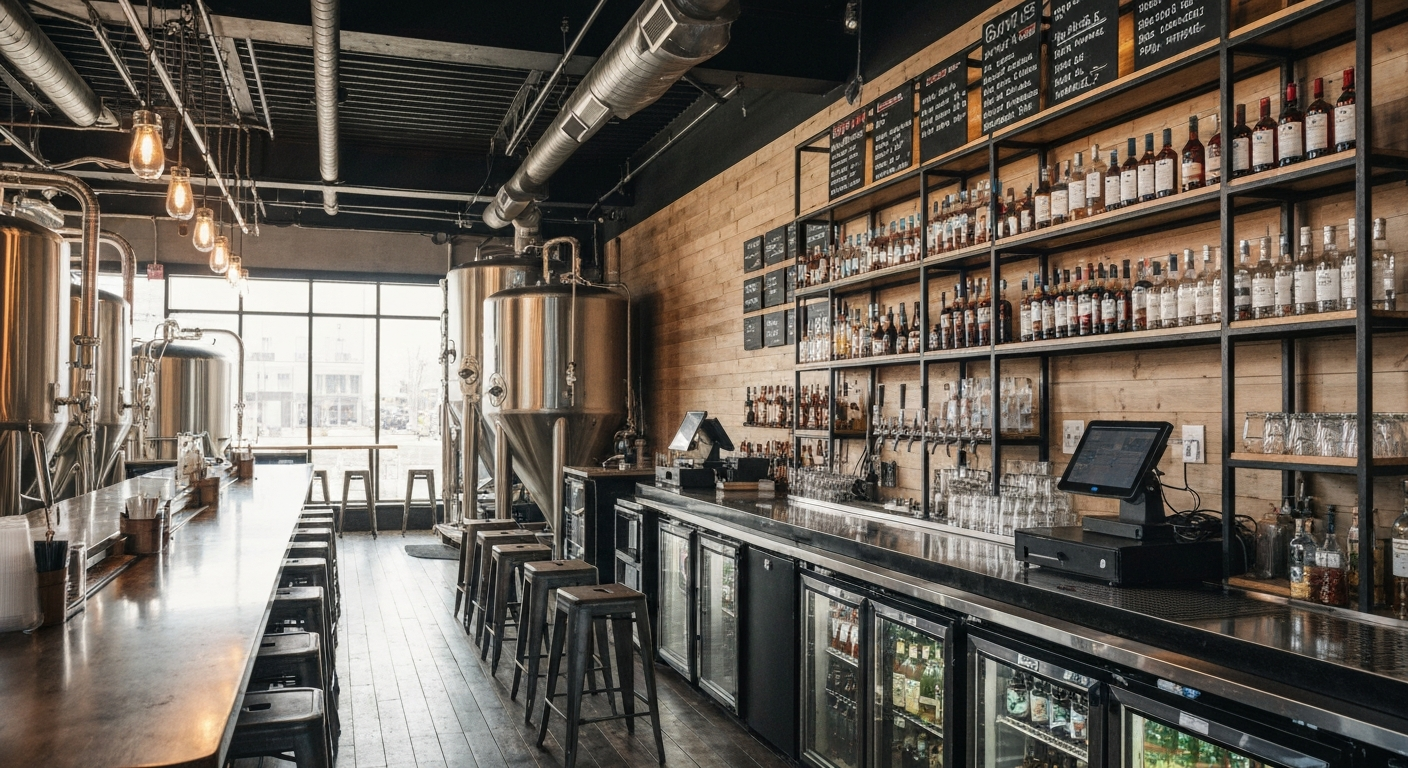
Virginia has over 400 craft breweries. That puts the state firmly in the national top 10 — and it means the market has real depth, real competition, and a customer base that knows what good beer tastes like. If you’re thinking about opening a taproom or production brewery, you’re not a pioneer, but you’re not late either. The same goes for bars: Virginia’s mixed beverage licensing system is accessible if you understand the steps, but it will punish you on timing if you don’t plan around the ABC process.
This guide covers both tracks — brewery and bar — because the audience often overlaps. Many people starting a brewery want a taproom. Many bar owners want to eventually brew their own product. The licensing paths are different. The business formation steps are the same.
Brewery vs. Bar — Which License Path?
The Virginia ABC Authority draws a hard line between manufacturing licenses and retail licenses. That distinction determines your fee structure, your legal permissions, and what you can actually serve.
If you’re brewing beer and selling it on-site, you need a brewery license. This is a manufacturing license, and it scales with production volume:
- Up to 500 barrels/year: $380/year
- 501–10,000 barrels/year: $2,350/year
- Over 10,000 barrels/year: $4,690/year
For a startup brewery, you’re almost certainly in that first tier. Five hundred barrels is roughly 15,500 gallons — more than enough to fill a taproom and a modest distribution footprint while you build the business.
There’s also a Limited Brewery license with the same fee structure, but it caps production at 15,000 barrels per year and requires that the brewery be located on a farm in Virginia. If you’re building an agri-brewery or farm-to-glass concept, that’s worth knowing. If you’re in a commercial space in Richmond or Charlottesville, it doesn’t apply.
If you’re opening a bar, taproom that serves other brands, or a restaurant with a full bar, you need a retail license — not a manufacturing one. The standard route is the Mixed Beverage Restaurant license, which covers spirits, beer, and wine. State fees run:
- 1–100 seats: $1,050/year
- 101–150 seats: $1,495/year
- 151–500 seats: $1,980/year
On top of the state fee, you’ll pay a local ABC license fee to your city or county: $200 for 1–100 seats, $350 for 101–150 seats, $500 for 151–500 seats. These aren’t optional — both the state and local license are required.
If you don’t plan to serve spirits — just beer and wine — an On-Premises Beer and Wine license costs less. It’s worth asking your ABC licensing specialist whether that fits your concept. Most full bars want the mixed beverage license, but a neighborhood beer bar or wine bar might not need spirits at all.
The number every first-timer misses: ABC processing takes 60–90 days. Not a week. Not two weeks. Two to three months. Apply before you sign a lease if possible, or at minimum the day you sign. Opening delays are expensive, and “waiting on ABC” is the most common cause.
Business Structure and Registration
Before you touch the ABC application, get your business entity in order. Virginia’s process is straightforward.
Form an LLC. File Articles of Organization with the Virginia State Corporation Commission online at cis.scc.virginia.gov. The filing fee is $100. Annual registration after that runs $50/year. For a bar or brewery, an LLC is almost always the right call — it separates your personal assets from the business, which matters a lot when you’re in a liability-heavy industry like alcohol service.
Get an EIN. Your Employer Identification Number is free from the IRS at irs.gov/ein. You need it to open a business bank account, hire employees, and complete your ABC application. Takes about 10 minutes online.
Register with the Virginia Department of Taxation at tax.virginia.gov. You’ll register for sales tax collection — alcohol sales in Virginia are taxable at the full sales tax rate (4.3% state plus 1% local, with some regional variation). If you hold a mixed beverage license, there’s an additional layer: Virginia imposes a 6% mixed beverage tax on all food and beverages sold by mixed beverage licensees. This is on top of the regular sales tax. Build it into your pricing model before you open, not after.
Virginia ABC Application Process
Everything starts at abc.virginia.gov. Virginia ABC has an online licensing portal where you’ll submit your Industry License Application. Budget 15–30 minutes to complete it — the application itself isn’t the bottleneck. The process that follows is.
Here’s what happens after you submit:
Background checks on all principals. Every owner, partner, or member with a financial interest in the business will go through a background check. Felony convictions related to alcohol or drugs will disqualify applicants. Disclose everything upfront — ABC investigators are thorough, and omissions create more problems than the underlying history in most cases.
Public notice posting. You’re required to post notice of your ABC application at the proposed business location for 30 days. This gives neighbors and the community the opportunity to file objections. Most applications proceed without opposition. But if you’re going into a dense residential neighborhood or a historically contentious location, it’s worth talking to adjacent property owners before the application goes up.
Zoning and certificate of occupancy. ABC won’t process your application to completion without confirmation that your location is properly zoned for alcohol sales and that you have — or are on track to receive — a certificate of occupancy. Sort out your zoning before you apply, not after. Your local planning or zoning office can tell you whether the space is approved for a bar, restaurant, or brewery use. If it isn’t, you need a use permit or variance before anything else moves.
Premises investigation. An ABC agent will inspect the physical location before the license issues. The premises need to be substantially complete — or at least far enough along that the agent can evaluate the layout, entrances, and compliance with the physical requirements for licensed establishments.
One other thing worth knowing: Virginia passed HB 2058 / SB 811 in 2025, making third-party delivery of beer, wine, and cocktails-to-go permanent. This had been a temporary COVID-era provision. It’s now a real revenue channel — if you’re building a bar or brewery concept, delivery partnerships and to-go cocktail sales are legitimately part of the business model now.
From application to license in hand: 60–90 days on average. Some applications move faster. Complex applications, locations with zoning issues, or applicants with complicated backgrounds take longer. Plan for 90 and be happy if it’s 60.
Insurance for Bars and Breweries
This is where first-timers consistently underestimate costs — and underestimate exposure.
Liquor liability insurance (also called dram shop coverage) is non-negotiable. Virginia recognizes dram shop liability under common law. That means if you serve someone who then injures a third party — a drunk driver who kills someone, a fight that puts someone in the hospital — you can be sued. Courts have found bars and restaurants liable in these situations. A single lawsuit can exceed your policy limits if you’re underinsured. Get liquor liability coverage before you serve your first drink.
General liability insurance should be $1 million per occurrence as a floor. Bars and breweries have significant slip-and-fall exposure, plus the general liability from operating a public-facing business. Most commercial landlords will require proof of general liability as a lease condition anyway.
Commercial property insurance covers your build-out, equipment, and inventory. For a brewery, this matters enormously — your brewing system alone can represent $75,000–$150,000 in capital. A fire or flood without adequate coverage is a business-ending event.
Workers’ compensation is legally required in Virginia once you hit three employees — and that count includes part-time, seasonal, and temporary workers. Subcontractor employees can also count toward the threshold depending on the arrangement. The penalty for non-compliance is up to $250/day uninsured, capped at $50,000 plus costs. Contact the Virginia Workers’ Compensation Commission at workcomp.virginia.gov if you have questions about coverage requirements.
Product liability matters specifically for breweries. If a batch is contaminated or defective — and it happens, even to careful operators — product liability coverage protects against claims from customers who get sick. This is separate from general liability and specific to the manufacturing side of the operation.
Budget-wise: a small bar with a solid but not excessive insurance package runs $3,000–$8,000/year. A brewery with production equipment, more complex property coverage, and product liability will typically run $5,000–$15,000/year or more depending on scale, location, and claims history. Get quotes from at least three brokers who specialize in hospitality or alcohol-related businesses. General commercial brokers often miss industry-specific exposures.
One more thing: all employees who serve alcohol must complete Responsible Beverage Service (RBS) training. This is a Virginia ABC requirement for licensed establishments — not optional, not just “recommended.” Factor it into your onboarding process.
Startup Costs at a Glance
Real numbers. No hand-waving.
Business formation and registration:
- LLC filing: $100 + $50/year annual registration (Virginia SCC)
- EIN: free (IRS)
- Sales tax registration: free (Virginia Department of Taxation)
ABC licenses:
- Brewery license (up to 500 barrels): $380/year state
- Mixed Beverage Restaurant license (1–100 seats): $1,050/year state + $200 local
- On-Premises Beer and Wine (if spirits-free): lower — ask ABC for current rates
Other licenses and permits:
- VDH food establishment permit (if serving food): $40/year + $40 plan review one-time fee
- BPOL (local business license): varies by city or county — based on gross receipts, rates set locally
Insurance:
- Bar: $3,000–$8,000/year
- Brewery with production: $5,000–$15,000/year
The big numbers — build-out and equipment:
This is where the real capital lives. A bar build-out in a raw commercial space runs anywhere from $100,000 to $500,000+ depending on location, size, condition of the space, and how ambitious the design is. Major cities like Richmond and Northern Virginia push toward the higher end. Smaller markets can come in cheaper, but construction costs have not been kind to anyone opening a hospitality business recently.
For a production brewery, add a 7-barrel brewing system, which is a common starter size: expect to pay $75,000–$150,000 for the system alone, before fermenters, glycol chillers, packaging equipment, kegs, and the cold storage to hold finished product. A fully equipped small production brewery in a built-out space realistically requires $250,000–$750,000 in total startup capital. Some founders bootstrap smaller with a 3-barrel or 1-barrel pilot system and scale, but your production ceiling affects how quickly you can grow distribution.
Brewery taproom or bar — neither is a low-capital business. The licensing fees are actually the smallest line items. What will determine whether you open is access to capital, a solid build-out plan, and a location that’s properly zoned before you sign anything.
Before You Apply for Your ABC License
A few practical things to do before you touch the ABC portal:
Confirm zoning first. Call or visit your local planning office. Ask specifically whether the address is zoned for your intended use — brewery, bar, or restaurant with alcohol service. Don’t assume because a previous bar operated in the space that zoning is automatically approved for you. Zoning conformance is often tied to the specific use and can change with ownership.
Talk to your local ABC office. Virginia ABC has regional offices and a licensing team that genuinely answers questions. Their main line is (804) 213-4400. Use it. A 20-minute conversation before you apply can save you weeks of back-and-forth during the application process.
Line up your professional team early. An accountant who understands hospitality accounting (the mixed beverage tax alone warrants specialized knowledge), a contractor experienced with commercial bar or brewery build-outs, and an insurance broker who handles alcohol-service businesses. You don’t need a lawyer to form an LLC or file an ABC application. But if you’re doing a complex deal — investors, partnership agreements, a long-term commercial lease — a few hours with an attorney is worth it.
Apply for your ABC license the day you have a committed location. Not when construction is done. Not when you’ve hired staff. The day you have a lease or a purchase agreement. Sixty to ninety days is the minimum. Every week you wait is a week your opening slides.
Virginia’s craft brewery scene is crowded — 400-plus breweries means the market rewards differentiation. The operators who build something with a clear identity, understand their local customer, and run the licensing process with discipline are the ones still open five years later. The licensing is manageable. The competition is real. Plan accordingly.