How to Start an Agritourism Business in Virginia: The Required Warning Sign and the Local Zoning Shield
How to Start an Agritourism Business in Virginia: The Required Warning Sign and the Local Zoning Shield
If you farm and want visitors on the property, whether for a pick-your-own field, a farm stand, a fall festival or a wedding barn, Virginia has two laws you need to understand before you open. The first is the agritourism liability statute, Va. Code 3.2-6400 to 3.2-6402. It can protect you from certain injury claims, but only if you post a specific warning sign. The second is the local zoning statute, Va. Code 15.2-2288.6, which limits how counties and cities can regulate agritourism on farmland. Owners who skip the sign lose the liability protection, and that is where most of the trouble starts.
This guide covers what the laws do, what to file and buy, and the order to do it in. It is written for a working farm owner, so treat it as a map. Confirm every fee and deadline with the agency named before you rely on it.
What Counts as Agritourism in Virginia
Under Va. Code 3.2-6400, agritourism means any activity on a farm or ranch that allows the public, for recreation, entertainment or education, to view or enjoy rural activities. The definition covers farming, wineries, ranching, horseback riding, historical and cultural activities, harvest-your-own activities, and natural activities and attractions. It applies whether or not you charge a fee. A free hayride counts the same way a paid pumpkin patch does.
Materials and Documents You Need
- Printed warning signs with black letters at least one inch high, one for the farm entrance and one for each activity site (see Step 5 for the wording)
- The same notice in clearly readable print for every written contract for professional services, instruction or equipment rental
- Your parcel's zoning designation and a copy of your locality's zoning map, from the county or city zoning office
- Articles of Organization (Form LLC1011) for an LLC, or Articles of Incorporation (Form SCC619) for a corporation, plus a registered agent who meets Virginia rules
- An Assumed Name Certificate if you will operate under a name other than your legal entity name
- Your local BPOL license application, from the Commissioner of the Revenue where the farm is located
- A sales tax permit from Virginia Tax if you sell taxable items
- General liability insurance quotes from an agent who has written agritourism coverage. The sign does not replace insurance.
Step-by-Step Setup
Step 1: Confirm Each Activity Qualifies
List every activity you plan: a tractor ride, a corn maze, a farm store, a ceremony in the barn, a guest room over the milk house. Check each one against the 3.2-6400 definition. Activities with no connection to rural life, such as a concert with no farm component, may fall outside the statute. Keep the written list. You will use it for the sign placement, your contracts and your insurance conversation.
Step 2: Check Zoning Before You Build or Sell
Section 15.2-2288.6 says no locality may regulate agritourism activities, the sale of agricultural products and incidental agricultural items, the preparation and sale of foods allowed under the home food exemption, or other usual and customary activities at an agricultural operation (as defined in 3.2-300). The exception applies only if the activity has a substantial impact on the health, safety or general welfare of the public. Any restriction must be reasonable and must consider economic impact. On agriculturally zoned property, a locality may not require a special exception, a permit not required by state law, or a special use permit for these activities unless there is a substantial impact.
Treat this as a shield, not a blanket exemption. Building codes, parking, septic systems and entrance permits remain local questions. Sound limits cannot be stricter than the general noise ordinance, except for outdoor amplified music. The section also does not affect ABC licensees under Title 4.1, chapter 2, so farm wineries rely on 15.2-2288.3 instead (see the farm winery page). A wedding venue that is not an agricultural operation follows ordinary event zoning. Ask the county zoning office which permits apply to your specific plan, and get the answer in writing.
Step 3: Form the Entity and Register Your Name
Most small farm operations use an LLC. The State Corporation Commission (SCC) Clerk's Office files Articles of Organization (Form LLC1011) for a $100 filing fee. You can file online through the SCC Clerk's Information System at https://cis.scc.virginia.gov/. Expedited online filing is available: next day for $50 or $100 (submitted by 2:00 PM Eastern, response by 4:00 PM the next business day), or same day for $200 (submitted by 10:00 AM Eastern, response by 4:00 PM). Expedited service is online only and nonrefundable. If you need to hold a name first, a name reservation costs $10 and lasts 120 days.
The LLC name must contain “limited company,” “limited liability company,” “LC,” “L.C.,” “LLC” or “L.L.C.” and must be distinguishable from names already on file. Your registered agent must be a Virginia resident with a Virginia street address, available during business hours, and either a member of the Virginia State Bar or a member, manager, officer, trustee or general partner of the entity. The entity cannot serve as its own agent.
Virginia LLCs file no annual report. They pay a $50 annual registration fee to the SCC, due on the last day of the 12th month after the month the LLC was organized, and every year after that. The SCC assesses the fee about two months ahead. A late payment adds a $25 penalty, and the LLC is canceled at the end of the third month after the due date. Stock corporations pay an annual report and registration fee based on authorized shares, so check the SCC fee schedule if you incorporate.
If you operate under a trade name, file an Assumed Name Certificate with the SCC for $10. It is not filed with the circuit court.
Step 4: Check Whether Your Locality Requires a BPOL License
Virginia has no general statewide business license, and the SCC issues none. The local business license is the Business, Professional and Occupational License (BPOL) tax under Va. Code 58.1-3700 et seq. Each city, county or town administers its own BPOL, usually through the Commissioner of the Revenue. It is not universal. Under Va. Code 58.1-3704, a locality may levy no general license at all. Stafford, Rockingham, Bedford County, Washington County, Montgomery County, Louisa and Fluvanna have no general county license, and a town can displace the county tax. Do not assume your county has no license, and do not assume it has one. Call the Commissioner of the Revenue.
The statute sets population-based floors. In a locality over 50,000 people, the license cannot be required on gross receipts under $100,000. In a locality of 25,000 to 50,000 people, the floor is under $50,000. No statutory floor applies under 25,000 people. Localities over 50,000 may waive the license for gross receipts up to $200,000, but verify that ceiling with your Commissioner of the Revenue. Localities set their own rates and filing deadlines. If you rent out equipment, note that BPOL law defines short-term rental as equipment rental, not Airbnb-style lodging.
Step 5: Post the Warning Sign Correctly
This is the step owners get wrong. Under 3.2-6402, signs must be placed in a clearly visible location at the entrance to the agritourism location and at the site of each agritourism activity. The letters must be black and at least one inch high. The notice begins with the word WARNING or ATTENTION, followed by the statutory text. Post it in this form:
WARNING
Under Virginia law, there is no liability for an injury to or death of a participant in an agritourism activity conducted at this agritourism location if such injury or death results from the inherent risks of the agritourism activity. Inherent risks of agritourism activities include, among others, risks of injury inherent to land, equipment, and animals, as well as the potential for you to act in a negligent manner that may contribute to your injury or death. You are assuming the risk of participating in this agritourism activity.
Failing to post the sign means you cannot use the immunity at all (3.2-6402 C). The protection is also narrower than the sign suggests. Under 3.2-6401, it does not apply if you were negligent or showed willful or wanton disregard for safety that caused the harm. It also does not apply if you knew or should have known of a dangerous condition on the land, in the facilities or equipment, or of an animal's dangerous propensity and did not make the danger known to the participant, or if you intentionally injure a participant. If you are sued, you must plead assumption of the risk as an affirmative defense. The statute does not remove all liability.
Step 6: Repeat the Notice in Your Contracts
The same notice must appear in clearly readable print in every written contract for professional services, instruction or equipment rental. Examples include riding lessons, workshop instruction and rental agreements for wagons or other equipment. Have a Virginia attorney confirm which of your contracts fall under this language and how the notice should be formatted within each one.
Step 7: Plan Your Sales and Lodging Taxes
Virginia's state sales tax is 5.3% (state plus local base). It is 6% in the regional-tax localities, 6.3% in eight localities and 7% in the Historic Triangle (James City County, Williamsburg and York County). The grocery rate is 1%. Which rate applies depends on your locality and what you sell, so confirm on the Virginia Tax site at https://www.tax.virginia.gov/sales-and-use-tax.
A county meals tax does not apply to farmers market and roadside sellers whose annual income from those sales is $2,500 or less (Va. Code 58.1-3833). Above that threshold, check your locality's rules. Transient occupancy tax can apply to travel campgrounds and rented guest rooms under Va. Code 58.1-3819. City rates vary, so check locally.
Step 8: Handle Labor Rules
Virginia's minimum wage is $12.77 in 2026, $13.75 in 2027 and $15.00 in 2028. Reports indicate that farm workers become covered by the state minimum wage on January 1, 2027, so confirm the current status with the Department of Labor and Industry. Under Va. Code 65.2-101, farm laborers are outside workers' compensation unless more than three are full-time employees. Confirm your count and your coverage with your insurer and the Department of Labor and Industry before your first busy season.
Step 9: Address Alcohol and Food Permits
If you serve alcohol at events, an ABC banquet license is the usual route. The state fee is $40 per event or $300 annually. Local limits can be smaller, so confirm both with the Virginia Alcoholic Beverage Control Authority (ABC). If you sell food, start with the cottage food page to see what you can sell from your home kitchen. Prepared food generally needs a permit from the Virginia Department of Health (VDH) or the Virginia Department of Agriculture and Consumer Services (VDACS). Confirm which agency covers your product. Virginia has no statewide food-handler card rule, but food establishments must have a Certified Food Protection Manager.
Step 10: Check Contractor Licensing for Barn and Build-Out Work
If you hire a contractor to convert a barn or build restrooms, check that the contractor's license covers the job. Since July 1, 2025, Virginia contractor license classes are Class C for jobs over $1,000 to under $30,000, Class B for $30,000 to under $150,000, and Class A for $150,000 or more. Verify the license with the Department of Professional and Occupational Regulation (DPOR) before work starts.
Setup Notes by Venue Type
Farm Stands
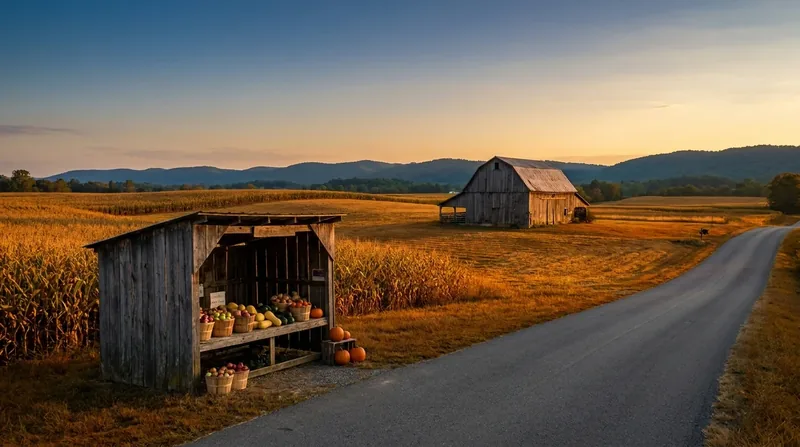
The 15.2-2288.6 shield covers the sale of agricultural products and incidental agricultural items on an agricultural operation. The meals tax threshold of $2,500 applies to farmers market and roadside sellers. Sales tax still applies to taxable items. Licensing is local or unconfirmed for your specific sales, so check with the county.
Wedding Barns
A wedding barn is not automatically agritourism. Whether events fall under the shield depends on whether the venue is part of an agricultural operation and whether the use creates a substantial impact. Expect parking, occupancy, septic and building code questions. Alcohol service requires the ABC license described above. Confirm event zoning with the county before you sign a venue contract.
Bed and Breakfasts
Rented guest rooms can trigger transient occupancy tax under Va. Code 58.1-3819. City rates vary, so check locally. Licensing for lodging is local or unconfirmed, so ask the county zoning office and your Commissioner of the Revenue what applies to your property.
Campgrounds
Travel campgrounds can trigger transient occupancy tax under Va. Code 58.1-3819. Campground licensing and zoning are local or unconfirmed for your site, so check with the county before you accept reservations.
Expected Results
A correctly posted sign, a documented zoning determination and a properly formed entity may help you limit your exposure to certain injury claims and help you operate with fewer surprises. Results depend on your facts, your insurance, your locality and how you run the operation. No outcome is guaranteed, and the sign does not protect against negligence or the other exceptions in 3.2-6401.
Tips and Common Mistakes
- Posting the sign only at the gate. The statute requires placement at the entrance and at each activity site. Walk every activity and post where a participant would start.
- Using small or non-black letters. The lettering must be black and at least one inch high. Measure it.
- Treating the sign as a substitute for insurance. It does not cover negligence or the other exceptions. Keep general liability coverage.
- Forgetting the contract notice. Riding lessons and equipment rentals need the notice in writing.
- Assuming 15.2-2288.6 exempts everything. Parking, septic, building codes and entrance permits remain local.
- Assuming every locality has a BPOL. Some have no general license, and towns can displace the county tax. Confirm with the Commissioner of the Revenue.
- Filing a trade name with the circuit court. The Assumed Name Certificate is filed with the SCC for $10.
- Missing the LLC registration fee. The $50 fee is due on schedule, and a late payment adds a $25 penalty.
- Skipping documentation. Photograph each sign with the date, and save the written zoning determination in your records.
Next Steps
Start with the activity list, get your zoning answer in writing, and then form the entity and post the sign before your first visitor arrives. The Virginia Small Business Development Center network at https://www.virginiasbdc.org/ offers free planning help. Official filing and tax information is at the SCC Clerk's Office, https://www.scc.virginia.gov/businesses/, and Virginia Tax, https://www.tax.virginia.gov/.
Disclaimer: This article is informational content, not legal or tax advice. Statutes, fees and deadlines change. Confirm every figure with the named agency before you act. For liability language, contracts and zoning disputes, consult a qualified Virginia attorney. For tax treatment, consult a CPA.