How to Start a Business in Staunton, Virginia
Staunton doesn’t try to compete with Northern Virginia on scale. It competes on character, cost, and culture — and for a certain kind of business owner, it wins on all three.
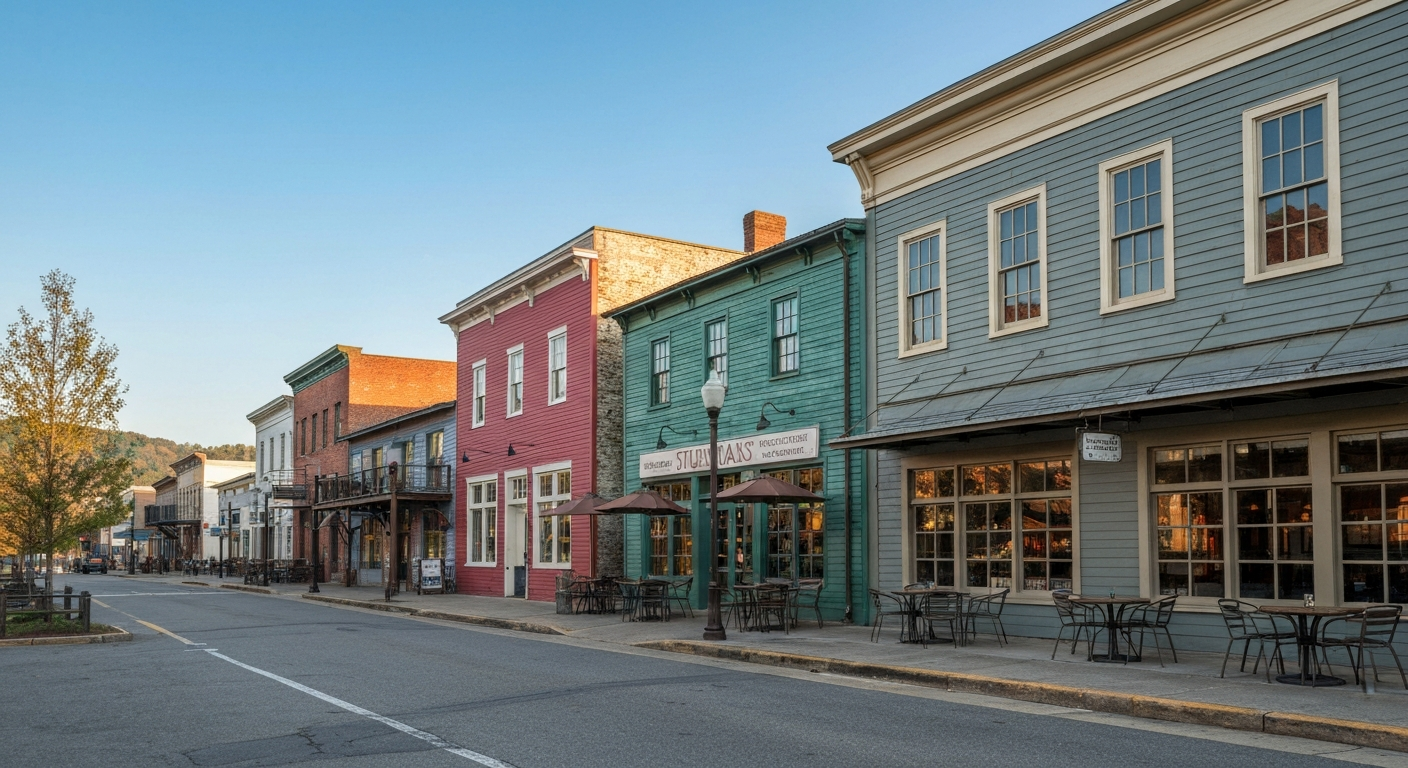
The Wharf Historic District, carved out of restored 19th-century warehouses along Johnson Street, is one of the most compelling mixed-use commercial districts in the Shenandoah Valley. The American Shakespeare Center’s Blackfriars Playhouse — the world’s only full-scale recreation of Shakespeare’s original indoor theater — draws close to 100,000 visitors annually, fueling a hospitality and dining economy that punches well above what a city of 25,000 would normally sustain. And the Virginia Enterprise Zone covering most of the central business district offers state and local tax incentives that can meaningfully reduce startup costs for businesses locating downtown.
The one thing you cannot miss before you open: Staunton requires you to file a business license application within 30 days of beginning business. Most Virginia cities give you 60 to 75 days. Staunton gives you 30. Miss that window and you face penalty and interest from the start.
Why Staunton for Your Business
Staunton is an independent city of approximately 25,000 residents in the Shenandoah Valley, flanked by Augusta County (which surrounds the city but is a separate jurisdiction) and the smaller independent city of Waynesboro. The city sits at the intersection of I-81 and I-64 — giving it strategic freight access to both the Northeast Corridor and the Richmond/Hampton Roads markets.
The cultural economy is the differentiator. The American Shakespeare Center brings approximately 100,000 visitors annually to see performances at the Blackfriars Playhouse — the world’s only full-scale recreation of Shakespeare’s indoor theater, built to the original specifications. That visitor volume supports a dense ecosystem of restaurants, boutique hotels, galleries, and specialty retail that would not otherwise exist in a city of this size. Staunton has five National Register of Historic Places districts and is routinely named one of the most charming small cities in the South.
The Wharf Historic District is the creative and culinary hub. The restored warehouse district along Johnson Street features restaurants, craft beverage producers, galleries, and boutique hotels in buildings that were previously underutilized industrial space. If you’re opening a restaurant, bar, gallery, specialty retail shop, or boutique hotel, the Wharf District provides the foot traffic, the aesthetic, and the neighboring anchor tenants to support it.
The Virginia Enterprise Zone covers the central business district. Most of the central business district and the West Beverley Street corridor are designated Virginia Enterprise Zone properties. Qualifying businesses that locate or expand within the zone may be eligible for state tax credits and local fee incentives. The Staunton Downtown Development Association (SDDA) can help you determine whether your location qualifies.
Staunton Downtown Development Association (SDDA) PO Box 201 Staunton, VA 24402 Phone: (540) 332-3867 stauntondowntown.org
The SDDA is a nonprofit organization dedicated to enhancing downtown commerce. It coordinates marketing, promotion, and economic development programs for downtown businesses, and is an early-stage resource worth contacting before you commit to a location.
Educational institutions provide a workforce pipeline. Mary Baldwin University is located in Staunton, providing a stream of graduates across a range of disciplines. The Virginia School for the Deaf and Blind and Stuart Hall School are also located in the city.
The cost advantage is real. Cost of living in Staunton is substantially below Northern Virginia — and below most of the state’s independent cities. For entrepreneurs relocating from the DC metro area or for remote workers who want an affordable but culturally rich home base for their business, the savings on real estate, labor, and living costs are meaningful.
Virginia is a right-to-work state. There is no city income tax in Staunton. The Virginia corporate income tax is a flat 6%.
Choose Your Business Structure
LLC (Limited Liability Company): File Articles of Organization with the Virginia SCC at cis.scc.virginia.gov. Filing fee: $100. Annual registration fee: $50. The LLC is the most common structure for Staunton small businesses — liability protection, flexible taxation, and relatively simple maintenance.
Sole Proprietorship: No SCC filing required unless you’re operating under a trade name. Fictitious name registration with the SCC: $10. No liability shield — your personal assets are exposed.
Corporation: File Articles of Incorporation with the SCC. Filing fee: $75. Better suited for businesses seeking outside investment or issuing stock.
S-Corp Election: An IRS federal tax election (Form 2553) made after forming your LLC or corporation. A tax treatment, not a separate entity type.
For LLC formation guidance, see How to Start an LLC in Virginia. To compare formation services, see Best LLC Services in Virginia.
Register with the State
Virginia SCC Registration
File at cis.scc.virginia.gov. LLCs: $100. Corporations: $75. Processing: one to three business days online.
Federal Employer Identification Number (EIN)
Apply free at irs.gov/ein. Issued instantly online. Required for your bank account, payroll, and business license application. See Get an EIN in Virginia.
Virginia Department of Taxation
Register for sales tax and employer withholding at tax.virginia.gov.
Sales Tax Rate in Staunton: 5.3% — made up of 4.3% state and 1% local. The standard Virginia rate; no regional surcharge.
Get Your Staunton Business License
Every business operating in Staunton city limits must obtain a BPOL (Business, Professional, and Occupational License) from the Commissioner of the Revenue.
Commissioner of the Revenue City Hall, 1st Floor 116 West Beverley Street PO Box 4 Staunton, VA 24402 Phone: (540) 332-3829 Fax: (540) 851-4022 Commissioner: Maggie Ragon Hours: 8 AM – 5 PM, Monday – Friday
CRITICAL: 30-Day Filing Deadline
You must file an application within 30 days of beginning business in Staunton. This is stricter than most Virginia cities, which allow 60 to 75 days. If you open on March 1, your application is due by March 31. Late filing triggers penalty and interest that accrue from your start date.
Set a reminder the day you open. Don’t let the 30-day window slip.
BPOL Tax Rates:
| Business Type | Rate per $100 Gross Receipts |
|---|---|
| Contractors | $0.16 |
| Retail merchants | $0.20 |
| Financial, Real Estate, Professional services | $0.40 |
| Repair, personal and business services | $0.36 |
Wholesale Merchants — Tiered Structure:
- Purchases $10,001–$50,000: $100 tax plus $0.50 per $100 of purchases exceeding $10,000
- Purchases $50,001 and above: $300 tax plus $0.12 per $100 of purchases
The professional services rate of $0.40 per $100 is at Virginia’s statutory maximum for that category. Budget accordingly if you’re a consultant, attorney, accountant, architect, engineer, or other professional.
Renewals: Due March 1 each year. Late filing triggers penalty and interest.
Zoning and Occupancy Permits
Before your business license is issued, zoning must be confirmed.
An occupancy permit may be required from the Zoning Administrator before the Commissioner can issue your license. Contact the Zoning Administrator, the Inspection Division, and the Planning Department at City Hall to determine what your specific business type and location require.
Home-based businesses: Staunton’s residential zoning has specific requirements for home occupations. Check with the Zoning Administrator before you begin operating from home — restrictions typically apply to signage, customer traffic, employees, and activities that affect the residential character of the neighborhood.
Enterprise Zone properties: If your location is within the Virginia Enterprise Zone — which covers most of the central business district and West Beverley Street corridor — the SDDA at (540) 332-3867 or stauntondowntown.org can help you understand what incentives may apply.
City Hall staff will direct you to the correct agencies for your proposed business use. It is worth a phone call before you commit to a location.
Business Tangible Personal Property — May 1 Deadline
Every business in Staunton must file a Business Personal Property return. This is separate from the business license and has a different deadline.
What to report: An itemized list of all property employed in your business — furniture, fixtures, machinery, tools, computers, equipment. Include fully depreciated items. Items with a fully depreciated book value of zero still must be reported.
Filing deadline: May 1 each year. Note: this is later than many Virginia cities, which require personal property returns in March. Don’t confuse the dates — your business license renews March 1, your personal property return is due May 1.
First-time filers: Use the 2025 Business Personal Property Form, available at ci.staunton.va.us. File with the Commissioner of the Revenue.
Returning filers: Your prior year asset list will be mailed to you in late March. Review it, add any new equipment acquired during the year, and return it by May 1.
Payment due: December 5 — the Commissioner assesses the value, and the Treasurer bills you for payment.
Missing the May 1 deadline results in the Commissioner estimating your personal property based on prior years, which is rarely favorable. File on time.
Business Resources in Staunton
Staunton Downtown Development Association stauntondowntown.org | (540) 332-3867 | PO Box 201, Staunton, VA 24402 Marketing, promotion, and economic development for downtown businesses. If you’re locating in or near the Wharf District or the Beverley Street corridor, this is your primary local business support resource.
Virginia Enterprise Zone The zone covering most of the central business district and West Beverley Street corridor offers state tax credits for job creation and qualified zone investments, plus local fee incentives. Contact the SDDA or City Hall for current incentive details and eligibility requirements.
Staunton-Augusta County Chamber of Commerce Regional business networking, advocacy, and events. Covers both Staunton and the surrounding Augusta County business community.
SBDC (Small Business Development Center) Free one-on-one consulting for business planning, financial projections, and operations. Available through the network of Virginia SBDCs.
SCORE Free mentoring from retired executives and experienced business owners. Available in-person and virtually.
Virginia Business One Stop business.virginia.gov — the state’s consolidated portal for registrations, licenses, and permits.
Key Contacts at a Glance
| Department | Address | Phone |
|---|---|---|
| Commissioner of Revenue (BPOL, personal property) | 116 W. Beverley Street, City Hall 1st Floor | (540) 332-3829 |
| Zoning Administrator | City Hall | — |
| SDDA (downtown business support) | PO Box 201 | (540) 332-3867 |
| Virginia SCC | cis.scc.virginia.gov | — |
| Virginia Dept. of Taxation | tax.virginia.gov | — |
Summary: Starting a Business in Staunton
Staunton is an unusual opportunity for Virginia entrepreneurs: a small city with serious cultural draw, an active downtown economy, a Virginia Enterprise Zone covering the prime commercial real estate, and a cost structure well below what you’d pay in the Northern Virginia or Hampton Roads metro areas.
The process is: form your entity with the Virginia SCC → get your EIN → register with the Virginia Department of Taxation → verify zoning and obtain occupancy permits → apply for your BPOL license within 30 days of opening → set a May 1 calendar reminder for the personal property return → renew your license by March 1 each year.
The 30-day filing deadline is non-negotiable. Most people don’t know it exists until they’ve already missed it — because most Virginia cities give 60 to 75 days. Write it down the day you open.
The Enterprise Zone is worth investigating before you sign a lease. If your intended location is within the zone, the available incentives — state tax credits and local fee reductions — can meaningfully reduce your first-year costs. The SDDA at stauntondowntown.org is the right first call.
And the cultural economy that the American Shakespeare Center anchors is a real business driver, not a tourism talking point. A hundred thousand visitors a year passing through a city of 25,000 creates measurable demand for restaurants, lodging, retail, and services that wouldn’t otherwise be sustainable. If your business serves any of those categories, Staunton has built-in demand that most Shenandoah Valley cities simply don’t have.