How to Get a Business License in Petersburg, Virginia
Two things stand out about the Petersburg business licensing process. First, the prerequisites list — Petersburg is unusually explicit about what documentation each type of business must bring before the Commissioner will issue a license. Contractors need their DPOR card. Attorneys need their Bar license. Salon owners need their state license. Food businesses need their health permit. None of these are negotiable. Walk in without the right documents and you leave without a license.
Second, the business tangible personal property tax: $4.90 per $100 of assessed value. That’s one of the highest rates in Virginia. A business with $50,000 in equipment pays $2,450 per year — separate from the business license, separate from state taxes, and ongoing every year for as long as you have business assets in Petersburg.
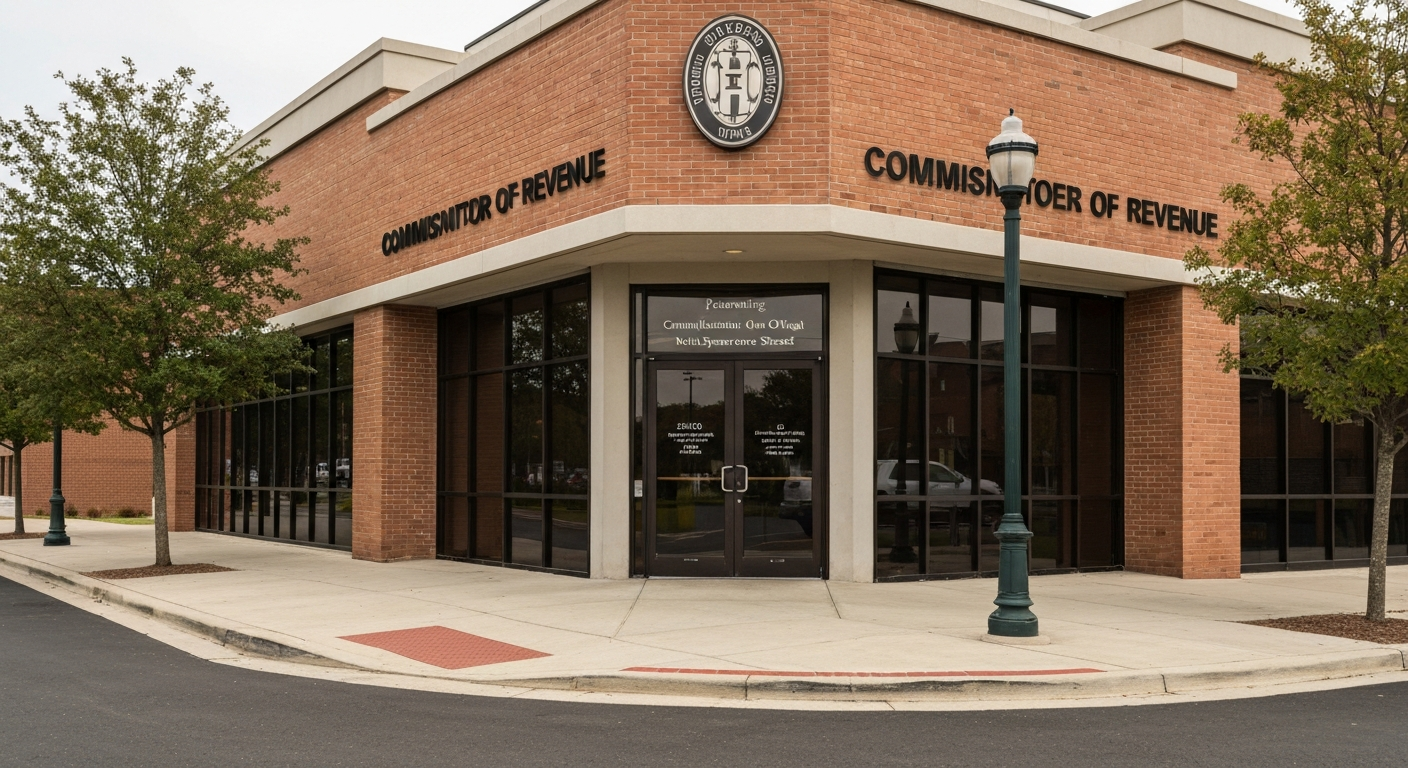
The BPOL license itself is straightforward: gross-receipts-based, rates vary by category, and the Commissioner’s office at 144 North Sycamore Street is responsive by phone and email. This guide covers the full process.
Petersburg License Basics
Who must file: All businesses operating in Petersburg — regardless of size, structure, or revenue — must obtain a license from the Commissioner of the Revenue.
When to file: You must obtain your license before conducting any business. Operating without a license exposes you to back taxes, penalties, and interest for the full unlicensed period.
Petersburg is an independent city: Separate from Dinwiddie County, Prince George County, and Colonial Heights. If your business address is outside Petersburg city limits, you file with the appropriate county — not with the Petersburg Commissioner. Confirm your exact jurisdiction before filing.
BPOL tax structure: Petersburg’s business license tax is based on gross receipts. Rates are determined by your business category, following Virginia Code classifications.
Step 1: Complete All Prerequisites
This step is not optional. Petersburg’s Commissioner of the Revenue will not issue your license until all prerequisites are satisfied for your business type.
Gather the following documentation before visiting the Commissioner’s office:
All businesses:
- Federal EIN (apply free at irs.gov/ein)
Commercial locations:
- Building inspection or fire inspection clearance for your specific location
LLCs and Corporations:
- Virginia SCC certificate of organization or articles of incorporation
- SCC registration must be current and in good standing
Food establishments:
- Health Department permit from the Crater Health District (not the city — contact the Crater Health District for Petersburg-area food service permits)
Contractors:
- Copy of Virginia DPOR Class A, B, or C contractor’s license
Beauticians and barbers:
- Copy of state cosmetology or barber license
Salon owners:
- Copy of state salon license
Medical professionals:
- State medical license from the applicable Virginia licensing board
Attorneys:
- Virginia State Bar license
Real estate brokers:
- State realtor card from the Virginia Real Estate Board (through DPOR)
Daycare centers, adult homes, group homes:
- License from the Virginia Department of Social Services
Car dealerships:
- DMV certificate from the Virginia Department of Motor Vehicles
Alcohol sales (any type):
- Virginia ABC license from the Virginia Alcoholic Beverage Control Authority (abc.virginia.gov)
If you’re uncertain which prerequisites apply to your specific business type, email [email protected] before your visit. The Commissioner’s team will confirm what you need.
Step 2: Apply at the Commissioner’s Office
Commissioner of the Revenue Brittany C. Flowers, Master Commissioner 144 North Sycamore Street Petersburg, VA 23803 Phone: (804) 733-2315 Fax: (804) 508-6948 Email: [email protected] Hours: Monday – Friday, 8:00 AM – 5:00 PM
Bring to your appointment:
- All prerequisite certificates and licenses (see Step 1)
- Federal EIN (or SSN for sole proprietors)
- Virginia SCC formation documents (for LLCs and corporations)
- Government-issued photo ID
- Business address and mailing address
- Estimated gross receipts for the current year
- Start date of business operations
New businesses: Estimate gross receipts through December 31 of your first operating year. At renewal, you’ll report actual prior-year gross receipts and the tax will adjust accordingly.
BPOL Tax Rates
Petersburg’s BPOL tax is based on gross receipts. Rates follow Virginia Code business classifications:
| Business Category | Rate Structure |
|---|---|
| Contractors | Per gross receipts — contact Commissioner |
| Retail merchants | Per gross receipts — contact Commissioner |
| Professional services | Per gross receipts — contact Commissioner |
| Business, personal, repair services | Per gross receipts — contact Commissioner |
| Wholesale merchants | Per gross receipts — contact Commissioner |
| Financial services | Per gross receipts — contact Commissioner |
Petersburg does not publish a universal rate schedule on its primary public-facing materials in the same format as some other Virginia cities. Contact the Commissioner at (804) 733-2315 or [email protected] with your business description to get the applicable rate for your category before you apply.
What gross receipts means: Total revenue generated from your business activities in Petersburg — before deducting expenses. If you operate in multiple jurisdictions, only Petersburg-sourced receipts count toward the Petersburg BPOL.
Renewals: After your first year, the renewal license is based on prior-year actual gross receipts. The Commissioner’s office will send renewal notices. Penalties apply for late filing and late payment.
Business Tangible Personal Property — Budget for This
The business tangible personal property tax is the single most important cost differentiator in Petersburg compared to neighboring jurisdictions.
Rate: $4.90 per $100 of assessed value.
For context:
- Richmond: $3.70/$100
- Roanoke: $3.45/$100
- Chesterfield County: $3.60/$100
- Petersburg: $4.90/$100
What is taxable: All business equipment, furniture, fixtures, computers, vehicles, tools, and other tangible property employed in your business. This includes:
- Office furniture and equipment
- Point-of-sale systems and computers
- Commercial kitchen equipment
- Construction tools and equipment
- Business vehicles (in addition to vehicle personal property tax)
- Fully depreciated items still in active use
Even if an asset has zero book value on your balance sheet, if it’s still being used in your business, it must be included on your return.
Machinery and tools (manufacturing, processing, and extraction operations): $3.80 per $100.
Example calculations:
$50,000 in assessed business equipment: $50,000 ÷ 100 × $4.90 = $2,450 per year
$100,000 in assessed equipment: $100,000 ÷ 100 × $4.90 = $4,900 per year
$25,000 in assessed equipment: $25,000 ÷ 100 × $4.90 = $1,225 per year
This is a separate annual filing with the Commissioner of the Revenue. You must file a business personal property return each year listing all business assets, their original cost, and year of acquisition. The Commissioner assesses the value and the tax bill is issued through the Treasurer’s office.
Real estate tax: $1.27 per $100 of assessed value, applicable if your business owns its Petersburg real property.
Economic Incentives
Rehabilitation tax exemption: Petersburg offers a tax exemption for qualifying improvements to certain properties. This is particularly relevant for businesses investing in the renovation of historic downtown buildings — which is where much of the new investment in Petersburg is occurring. Contact the City Assessor’s Office for eligibility criteria and the application process.
Enterprise Zone: Check with Economic Development (30 Franklin Street, 3rd Floor) for current Enterprise Zone designations. Zone participants may qualify for state job creation grants, real property investment grants, and local incentives.
Main Street Petersburg: The downtown revitalization nonprofit provides marketing support, programming, and connections for businesses locating in the downtown commercial district. For businesses opening in the historic core, MSP is an active partner.
Partnership for Petersburg: State-backed initiative with resources for workforce development and public safety improvements. Businesses hiring from Petersburg’s workforce pipeline may have access to related programs.
Employer Requirements
If you hire employees in Petersburg, several additional registrations apply.
Workers’ compensation insurance: Required for businesses with three or more regular employees under Virginia law. Coverage must be provided at no cost to employees. Contact a licensed insurance broker or the Virginia Workers’ Compensation Commission for carrier information.
Virginia Employment Commission: Register with the VEC for employer unemployment insurance before you issue your first paycheck.
Virginia income tax withholding: Withhold Virginia income tax from employee wages and remit to the Virginia Department of Taxation. Register at tax.virginia.gov.
Federal payroll taxes: Register for FUTA and set up withholding for federal income tax, Social Security, and Medicare. Federal payroll tax deposits follow IRS schedules based on your payroll amount.
The Licensing Process in Order
Here is the complete sequence for getting properly licensed in Petersburg:
- Determine your business structure — LLC ($100 with Virginia SCC), corporation ($75), or sole proprietorship (no SCC filing unless using a trade name at $10)
- Register with the Virginia SCC at cis.scc.virginia.gov (required for LLCs and corporations)
- Obtain your federal EIN at irs.gov/ein (required for all business types)
- Register with the Virginia Department of Taxation at tax.virginia.gov for sales tax, employer withholding, and corporate income tax as applicable
- Gather all prerequisite documentation — building inspection clearance, health permits, professional licenses, state certifications, and any other required materials for your specific business category
- Email the Commissioner ahead of your visit at [email protected] to confirm which prerequisites apply to your business type and what forms are required
- Visit the Commissioner of the Revenue at 144 North Sycamore Street with all documentation in hand
- Register for meals tax or lodging tax at the time of your license application if applicable
- Obtain workers’ compensation coverage and register with the Virginia Employment Commission if you have employees
- File your annual business tangible personal property return with the Commissioner and budget $4.90 per $100 of assessed equipment value
- Renew your license annually based on prior-year actual gross receipts — late penalties apply
The prerequisite documentation in step 5 is where most delays occur. Businesses requiring state professional licenses (medical, legal, cosmetology) or Virginia ABC licenses should start those applications weeks or months before they plan to open. The Commissioner cannot issue your license until all prerequisites are satisfied — no exceptions.
Renewal and Closing
Annual renewal: Based on prior-year actual gross receipts. The Commissioner’s office sends renewal notices, but you remain responsible for filing and paying on time regardless of whether you receive a notice.
Late penalties: Apply to both late filing and late payment. Contact the Commissioner’s office at (804) 733-2315 for current penalty and interest rates.
Closing your business: Notify the Commissioner in writing when you cease operations. Your tax liability continues until you formally notify the city. Stopping operations without notifying the Commissioner does not end your BPOL obligation — the city will continue assessing taxes until closure is formally recorded.
Document your closure notification (keep a copy of any written notice or confirmation from the Commissioner) for your records.
Business Tangible Personal Property — Filing Details
The personal property tax is separate from your BPOL license but equally mandatory. Every Petersburg business must file an annual return and pay the tax.
What to file: A complete inventory of all business assets — furniture, fixtures, equipment, computers, tools, vehicles used in business. Include acquisition year and original cost for each item. Fully depreciated items still in active use must be listed.
How assessed value works: The Commissioner uses depreciation schedules to calculate current assessed value from original cost and year of purchase. The assessed value (not original cost) is what’s taxed at $4.90 per $100.
Machinery and tools in manufacturing: $3.80 per $100 of assessed value — a lower rate than general business equipment, but still a significant annual cost for manufacturers.
Filing schedule: Contact the Commissioner at (804) 733-2315 or [email protected] for the current return form and filing deadline. First-time business owners should ask for personal property registration instructions when they apply for their initial BPOL license.
Year-over-year changes: At each annual filing, update your asset list to add new purchases and remove disposed equipment. Keeping an accurate running inventory throughout the year makes the annual filing straightforward.
Contact Summary
Commissioner of the Revenue Brittany C. Flowers, Master Commissioner Phone: (804) 733-2315 Fax: (804) 508-6948 Email: [email protected] Address: 144 North Sycamore Street, Petersburg, VA 23803 Hours: Monday – Friday, 8:00 AM – 5:00 PM
Economic Development 30 Franklin Street, 3rd Floor, Petersburg, VA 23803
Petersburg Area Regional Chamber (PARC) Regional business network
SBDC and SCORE: Free consulting and mentoring — virginiasbdc.org
The Bottom Line
Petersburg’s licensing process is prerequisite-heavy but transparent. The city tells you exactly what every business type needs to bring to the Commissioner’s office. Prepare your documentation, arrive with everything in hand, and the license issuance is straightforward.
The ongoing cost to plan for is the $4.90/$100 business personal property rate. Run the numbers on your expected equipment value before you commit to a Petersburg location — the annual personal property tax can significantly affect your total cost of operations compared to surrounding jurisdictions.
The email-accessible Commissioner’s office ([email protected]) is a practical resource. If you have questions before your appointment about which prerequisites apply to your business or what your BPOL rate category would be, email ahead and get clarity before you walk in.
For the full Petersburg business startup guide: How to Start a Business in Petersburg, Virginia. For LLC formation: How to Start an LLC in Virginia.