How to Start a Business in Harrisonburg, Virginia
Why Harrisonburg Is the Shenandoah Valley’s Commercial Capital
Harrisonburg is the largest city in the Shenandoah Valley and the commercial, educational, and cultural hub for a regional market extending across multiple counties. With a city population of approximately 56,879 — making it the fifth fastest-growing city in Virginia between 2020 and 2024 — and a Harrisonburg MSA (city plus Rockingham County) of around 144,000, it punches significantly above its weight for a Virginia city of its size.
The most immediate driver of that commercial vitality is James Madison University, with 22,760 enrolled students. JMU is not a peripheral presence — it is woven into the economic fabric of the city. Students generate demand for food service, retail, fitness, personal services, entertainment, and housing. The university’s faculty, staff, and alumni network provide a steady professional class. Eastern Mennonite University (1,870 students) and Blue Ridge Community College (7,300 students) add to the higher education presence, along with nearby Bridgewater College (approximately 1,500 students).
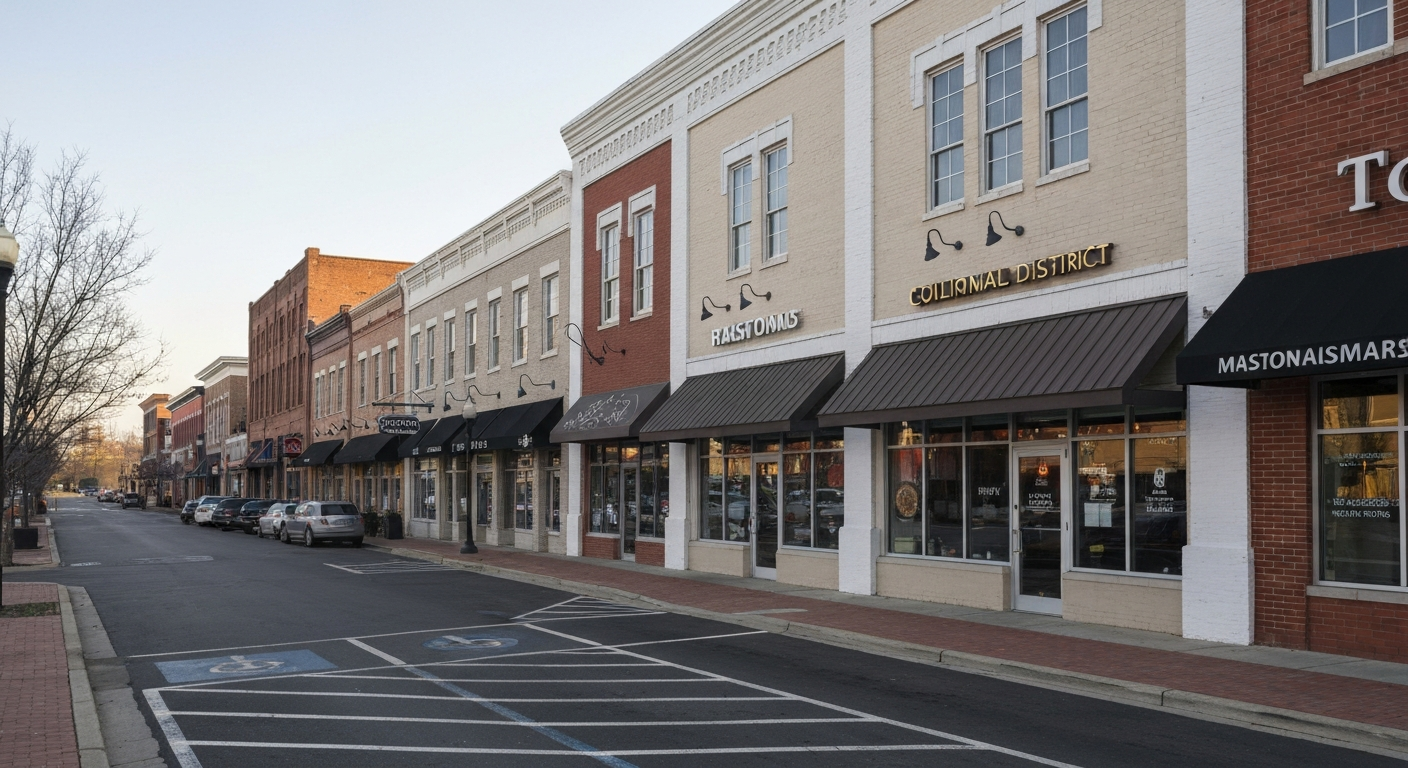
Harrisonburg earned a distinction no other Virginia city holds: in 2014, the state designated it Virginia’s first Culinary District. That designation reflects a genuine food-driven economy in the downtown corridor — farm-to-table restaurants, craft breweries, specialty food producers, and a culture of culinary entrepreneurship that has attracted chefs and food business owners from across the Mid-Atlantic. If you are considering a food business, Harrisonburg’s culinary identity is a legitimate competitive advantage.
The agricultural context matters too. Rockingham County, which surrounds the city, is the largest producer of agricultural products in Virginia. That agricultural base has created a thriving agritourism sector — farmers markets, u-pick operations, cideries, wineries, craft breweries using local ingredients, farm-to-table supply chains. Businesses that bridge the city’s culinary culture with the county’s agricultural production occupy a growing and differentiated niche.
Harrisonburg Economic Development at harrisonburgdevelopment.com provides startup resources, demographic data, incentive program information, and site selection support. The organization actively works to connect entrepreneurs with resources and to attract businesses to the city.
The cost of living in Harrisonburg runs well below Northern Virginia and Hampton Roads. The median home price is approximately $319,000 — affordable relative to most Virginia metro areas. Commercial lease rates are correspondingly lower. For I-81 corridor businesses, Harrisonburg’s location provides access to regional distribution networks, with proximity to I-64 interchange and the Virginia Inland Port approximately 65 miles to the north.
Virginia is a right-to-work state. There is no city income tax. The Virginia corporate income tax is a flat 6%.
Step 1: Choose Your Business Structure
Before you address any Harrisonburg-specific licensing requirements, establish your legal entity at the state level.
LLC: File Articles of Organization with the Virginia State Corporation Commission (SCC) at cis.scc.virginia.gov. Filing fee: $100. Annual renewal: $50 per year.
Sole proprietorship: No SCC filing required unless you use a trade name. If your business name differs from your legal name, register a fictitious name with the SCC for $10.
Corporation: File Articles of Incorporation with the SCC. Fee: $75.
S-Corp election: A federal tax election made on IRS Form 2553 — separate from state entity formation. The SCC has no involvement in this election.
The SCC Clerk’s Information System at cis.scc.virginia.gov handles online name searches, entity filings, and trade name registrations.
Step 2: Get a Federal Employer Identification Number
Obtain your free EIN from the IRS at irs.gov/ein. The online application takes about 15 minutes and issues your number immediately. You need an EIN for bank account opening, tax registrations, employee hiring, and Harrisonburg’s business license application.
Step 3: Register with Virginia Department of Taxation
Register for applicable Virginia taxes at tax.virginia.gov. If you sell taxable goods or services, you need a sales tax certificate of registration before your first sale.
Sales tax rate in Harrisonburg: 5.3% — 4.3% state plus 1% local.
If you hire employees, register for employer income tax withholding and remit withheld taxes to the Department of Taxation on a schedule based on payroll volume.
Step 4: Get Zoning Approval — This Comes First
This is where Harrisonburg differs from most Virginia cities, and where first-time applicants most often make a mistake: you must get zoning approval before you apply for a business license. The Commissioner of the Revenue will not process your license application without a signed Zoning and Building Form from Community Development.
Why Zoning Comes First
The zoning approval step serves two purposes. First, it confirms that your proposed business location is properly zoned for your business type. Second, it verifies that the appropriate Certificate of Occupancy has been issued for that location. The Commissioner uses the signed form as evidence that your location has been reviewed and approved.
For Non-Home-Based Businesses
Complete the Zoning and Building Form (available at harrisonburgva.gov) and submit it to the Department of Community Development for review and signature.
Department of Community Development City Hall, 409 South Main Street, 2nd Floor Harrisonburg, VA 22801
Submit in person at the 2nd Floor, or email to [email protected].
Community Development reviews your proposed location against the Harrisonburg zoning map and verifies occupancy status. Once approved, you receive a signed form to bring to the Commissioner of the Revenue downstairs.
For Home-Based Businesses
Home-based businesses require a Home Occupancy Permit rather than the standard Zoning and Building Form. The Home Occupancy Permit is free and is administered by Community Development.
Harrisonburg’s home occupation rules are stricter than many Virginia cities:
- No advertising signs on the property
- No exterior evidence of commercial activity — the business must be invisible from outside the property
- No outside employees working on-site
- No customer or client traffic beyond what is incidental to the residential character of the neighborhood
- Certain business types may be prohibited from residential locations entirely — confirm with Community Development before committing to a home-based model
Important: Home-based businesses still need a business license from the Commissioner of the Revenue. The Home Occupancy Permit does not substitute for the license — it substitutes for the standard Zoning and Building Form.
Step 5: Apply for Your Harrisonburg Business License
With your signed Zoning and Building Form (or Home Occupancy Permit) in hand, proceed to the Commissioner of the Revenue on the first floor of City Hall.
Commissioner of the Revenue City Hall, 409 South Main Street, 1st Floor Harrisonburg, VA 22801 Phone: (540) 432-7704
All businesses must obtain a license before commencing operations — including home-based businesses. This is not optional.
What to Bring
- Signed Zoning and Building Form (or Home Occupancy Permit approval)
- SCC formation documents (Certificate of Organization for LLC, Articles of Incorporation for corporations)
- Trade name registration if using a fictitious business name
- EIN letter
- Required permits for your business type: Health Department permit (food businesses), DPOR contractor license, Fire Department inspection approval
- Government-issued photo ID
Harrisonburg’s Tiered Fee Structure
Harrisonburg uses a graduated fee system that is genuinely small-business-friendly:
- Gross receipts of $10,000 or under: $0 fee — but a license is still required. You must file even though there is no charge.
- Gross receipts from $10,001 to $100,000: Graduated flat fees at tiered levels — check harrisonburgva.gov for the current fee schedule.
- Gross receipts over $100,000: A tax rate is applied per $100 of gross receipts, based on your business classification.
New businesses estimate gross receipts from your start date through December 31 of the current year. After your first full year in business, the license is based on actual prior-year receipts, reconciled in year two.
Renewals are due March 1 each year.
Step 6: Additional Permits by Business Type
Depending on your business activity, additional permits and approvals will be required before your license is issued or before you can legally operate:
Restaurants and food service: A Health Department permit is required before your business license is issued. Plan for the inspection process early — it takes time.
Contractors: Must hold a Virginia DPOR contractor license (state-level, Class A, B, or C based on project size) and provide a Workers’ Compensation Form 61-A at the time of application.
Beauty salons, nail salons, and spas: May require a Fire Department inspection and/or DPOR licensing depending on services offered.
Alcohol sales or service: ABC license from the Virginia Alcoholic Beverage Control Authority — a state process separate from local licensing.
Licensed professions (real estate, insurance, accounting, medicine): Verify state licensure requirements with the Virginia Department of Professional and Occupational Regulation (DPOR) before opening.
Step 7: Open a Business Bank Account
Open a dedicated business checking account before your first business transaction. This protects your liability shield and simplifies bookkeeping and tax preparation.
What to bring:
- EIN letter
- SCC formation documents
- Business license
- Government-issued photo ID
Local banking options with strong Shenandoah Valley presence include Virginia National Bank, First Community Bankshares, Atlantic Union Bank, and First Bank (Shenandoah Valley).
Additional Local Taxes
Beyond the BPOL license, Harrisonburg businesses may be subject to these additional taxes administered by the Commissioner of the Revenue:
Meals tax: Restaurants and food service businesses must register and collect the local meals tax on prepared food and beverages sold.
Lodging tax: Hotels, bed-and-breakfasts, and short-term rentals (Airbnb, VRBO) are subject to the transient occupancy tax.
Admissions tax: Applies to entertainment venues and ticketed events.
Utility services tax: Applies to businesses providing certain utility services.
Short-term rental tax: Separate from lodging tax in certain circumstances — confirm with the Commissioner.
Business personal property: File your annual Business Tangible Personal Property Return by March 31 each year. This covers equipment, furniture, computers, and other tangible property used in business.
Harrisonburg tax calendar reference:
- January 15: State estimated income tax
- March 1: Business license renewal
- March 31: Business personal property return
Business Resources in Harrisonburg
Harrisonburg Economic Development harrisonburgdevelopment.com — startup guide, demographic data, incentive program information, market studies.
Small Business Development Center (SBDC) Free one-on-one consulting, workshops, business plan development, and financial projections. Partially funded by the U.S. Small Business Administration.
SCORE Free mentoring from retired executives. Ongoing advisory relationships at no cost.
Harrisonburg-Rockingham Chamber of Commerce Regional business networking, advocacy, and member services.
Downtown Harrisonburg The culinary district designation and strong foot traffic from JMU make downtown Harrisonburg a genuine destination for food, retail, and experience-based businesses.
Virginia Business One Stop virginia.gov — central portal for SCC registration, Department of Taxation registration, and state licensing resources.
What Makes Harrisonburg Different
The zoning-first requirement is the procedural story. It is not obvious from the city website, and most people who walk into the Commissioner’s office without the signed Zoning and Building Form get sent back. Make the 2nd floor stop first.
The tiered fee structure genuinely rewards early-stage businesses. At $10,000 or under in gross receipts, you pay nothing — but you still file, which creates a paper trail and gets you into the system. The graduated fees from $10,001 to $100,000 mean your licensing cost scales with your revenue rather than hitting you with a flat tax when you are just getting started.
JMU’s 22,760 students drive commercial demand that far exceeds what a city of 56,000 would normally support. Food service, entertainment, fitness, tutoring, staffing, retail — all categories that serve a young adult population — benefit directly from the university’s enrollment.
And if you are building any kind of food, beverage, or agriculture-adjacent business, Harrisonburg’s culinary district designation and Rockingham County’s agricultural dominance create a context that is genuinely differentiated from every other Virginia city of comparable size.
Begin with a call to Harrisonburg Economic Development at harrisonburgdevelopment.com, schedule a visit to Community Development at City Hall (2nd Floor, 409 South Main Street) to get your Zoning and Building Form approved, and then proceed to the Commissioner of the Revenue on the 1st Floor. The process is sequential — but once you understand the sequence, it is straightforward.